The planning of Chengdu Tianfu International Airport Airport Airport Economic Zone has been released. Is it related to your hometown?
Notice of Sichuan Provincial People’s Government on Printing and Distributing the Planning Outline of Chengdu Tianfu International Airport Airport Airport Airport Economic Zone
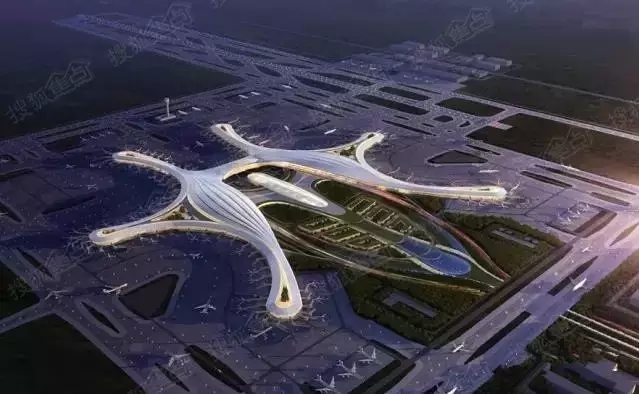
A few days ago, the general office of the provincial government issued the Planning Outline of Chengdu Tianfu International Airport Airport Airport Economic Zone (hereinafter referred to as the Outline).
The Outline is divided into 10 parts, which defines the overall requirements and spatial layout of the airport economic zone, and puts forward six development priorities and safeguard measures.
The planned total area is 298 square kilometers.
Enterprises can be settled in 2020.
Chengdu Tianfu International Airport Airport Airport Economic Zone is strategically positioned as a national international aviation hub, a national inland airport economic development demonstration zone, an important innovation and entrepreneurship base in the west, and an important modern airport new city in the west.
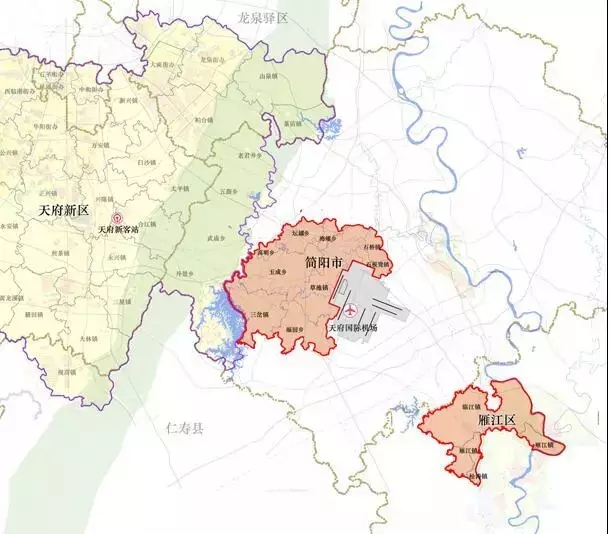
According to the Outline, the planned total area of the airport economic zone is 298 square kilometers, which consists of Chengdu area and Ziyang area, and the planning period is 2016-2020.
Among them, Chengdu area includes Futian Township, Sancha Town, Yucheng Township, Tanguan Township (except Sixi Village and Lianghe Village), Conch Township (except Donggou Village, Fuxing Village, Wannian Village, Huli Village and Changshan Village), Caochi Town (outside the airport red line), Gaoming Township (Nongfeng Village) and stonebridge Township (Yanzi Village and Tongxin Village).
Ziyang area includes most of Linjiang Town in Yanjiang District of ziyang (except Jile Village, Shuijing Village and Gaobai Village), Yanjiang Town (north and west of the main city) and Songtao Town (west of Chengdu-Chongqing Expressway in Hongyan Village and Zaishan Village), with an area of 99 square kilometers.
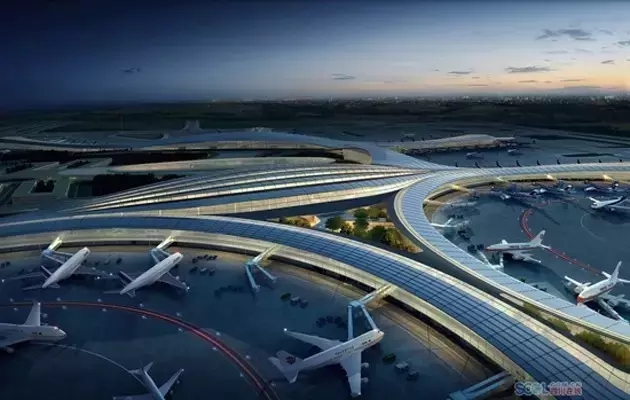
By 2020, the transportation, port logistics, business services and other facilities supporting Tianfu International Airport in the airport economic zone will be completed simultaneously, forming relatively complete conditions for enterprises to settle in. The starting area is 35 square kilometers, the layout of functional groups is initially formed, the airport industry system is accelerated, the regional ecological system and ecological red line are basically stable, and the management mechanism of the airport economic zone tends to be perfect.
By 2030, the airport economic zone will be basically completed, forming an industrial system dominated by advanced manufacturing and modern service industries, creating a number of industrial clusters such as airport manufacturing, aviation services and aviation logistics, building world-class infrastructure and public service facilities, and gathering high-end elements such as talents, technology, capital and information, becoming an important foreign exchange center in China.
The ecological forbidden area is not less than 150 square kilometers.
Create a spatial pattern of "one area, two pieces and multiple groups"
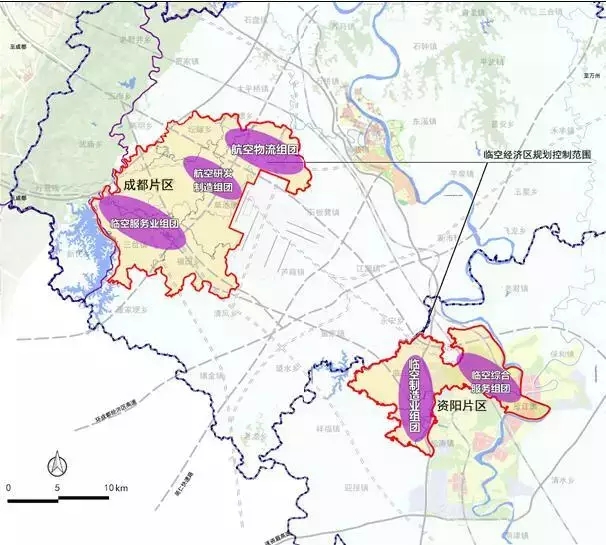
Considering the construction land conditions, the trend of major traffic facilities, the natural environment factors, the impact of airport noise and other factors, the Outline determines that five functional groups, namely airport service industry, aviation logistics, aviation R&D and manufacturing in Chengdu area, and airport manufacturing industry and airport comprehensive services in Ziyang area, will be focused on to guide the airport industry to gather and develop, forming a spatial development pattern of "one area, two pieces and multiple groups".
Among them, the ecological forbidden construction area is not less than 150 square kilometers, the short-term planning of urban construction land is 35 square kilometers, and the long-term planning of urban construction land is 100 square kilometers.
According to the Outline, the key construction areas in Chengdu area are located on the west and north sides of Tianfu International Airport, and the planned urban construction land is about 65 square kilometers, focusing on the development of aviation logistics, comprehensive bonded, service guarantee, aviation manufacturing, aviation maintenance and other related industries closely related to airport operation, moderately developing related formats such as headquarters economy, R&D design and business services, and forming functional groups such as airport service, aviation logistics and aviation R&D and manufacturing.
The key construction areas of Ziyang Area are located in the west and north of the main urban area of ziyang, and the planned urban construction land is about 35 square kilometers, focusing on the development of airport-oriented industries such as airport manufacturing, high-end business, tourism and holiday, strengthening the supporting services of the city, and forming functional groups such as airport manufacturing and airport comprehensive services.
For areas outside the functional groups of key construction, comprehensive control of space development will be implemented, and the construction sequence will be arranged reasonably. While meeting the needs of short-term development, sufficient space will be reserved for long-term development to promote the green, healthy and sustainable development of the airport economic zone.
Focus on the development of airport industry
Build a comprehensive transportation system
The "Outline" emphasizes that it is necessary to follow the development law of airport industry, combine the upgrading of regional industrial structure, focus on the development of advanced manufacturing industry with strong airport orientation and high added value, and modern service industry with knowledge-intensive and capital-intensive, develop high-end demonstration agriculture according to local conditions, and build a modern airport industry system with high-end, internationalization and characteristics.
In terms of airport manufacturing, the Outline proposes to take specialized parks as the carrier, focus on developing industries such as electronic information, intelligent instruments and aviation manufacturing with high technology content and strong aviation demand, improve the level of intelligent manufacturing and flexible manufacturing, and build an airport manufacturing industrial base. Industries with long industrial chains and high added value, such as high-end electronic equipment, 3D printing and wearable devices, will be given priority development.
In terms of airport service industry, the Outline proposes to cultivate and develop industrial clusters such as aviation logistics, aviation services, comprehensive bonded services and business services, create an international living and business environment, and become an important international exchange center and service center in the central and western regions. We will focus on the development of aviation financial leasing, aviation insurance, aviation consulting, aviation arbitration, aviation agency, aviation brokerage and other businesses.
In terms of high-end demonstration agriculture, the "Outline" proposes to actively carry out the cultivation, planting and display of special agricultural products such as vegetables, edible fungi, fruits and flowers, speed up the going out of special agricultural products with high added value, strengthen the application of new technologies and the pilot of new varieties, encourage agricultural product processing enterprises to upgrade according to aviation food standards, and actively promote "Internet+agriculture" and so on.
As for the construction of the transportation system, the Outline proposes to build a three-dimensional transportation system in the economic zone with efficient connection, smooth connection and perfect functions.
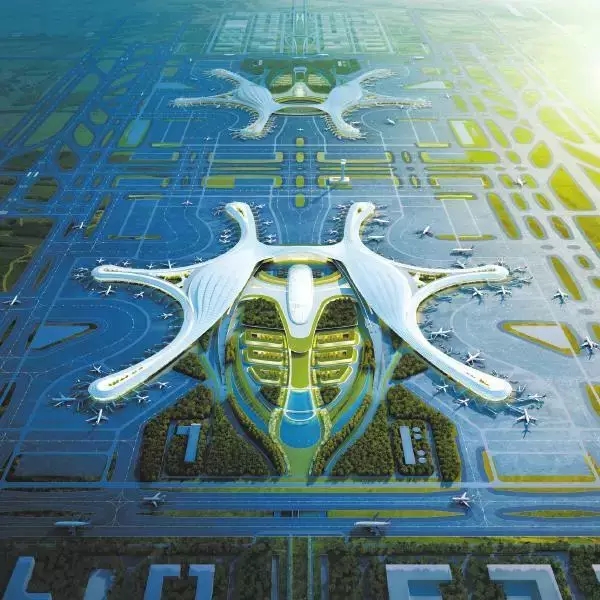
The Outline proposes to build a three-dimensional transportation transfer center of the new airport with high standards in accordance with the requirements of zero-distance transfer, and to build an integrated passenger hub with Tianfu International Airport as the core and various modes of transportation such as rail, highway and aviation, so as to improve the convenience of accessing the airport and the level of distribution in the region.
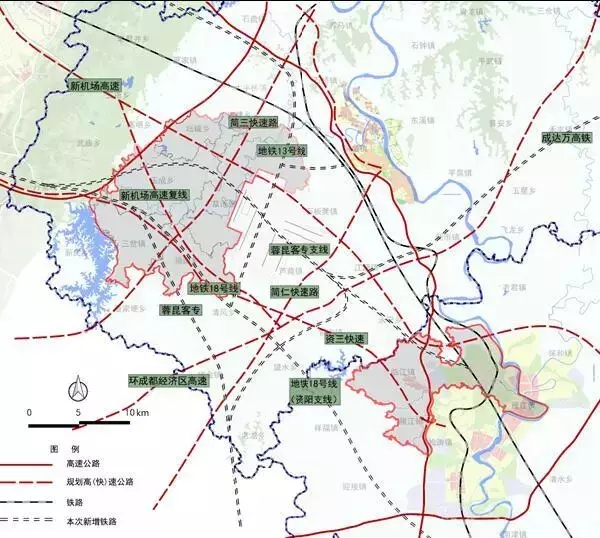
In terms of strengthening the construction of external passages, it is necessary to speed up the construction of railways such as Rongjing High-speed Railway, Rongkun High-speed Railway and Chengdu-Chongqing Passenger Dedicated Ziyang-New Airport Intercity Link. Vigorously promote the construction of urban rail transit projects such as Chengdu Metro Line 13, Line 18 and extension lines, Tianfu New Station passing through the new airport to Ziyang Intercity. Construction of Tianfu International Airport Expressway, Chengdu (Tianfu International Airport) to Yibin, Tianfu International Airport via Ziyang to Tongnan, Chengdu Plain Economic Zone Ring Road and other expressways.
In improving the internal road network system, we should speed up the construction of expressway from Ziyang to Sancha Lake, Jianyang to Renshou, Jianyang to Sancha Lake and Ziyang to Airport North.
Expand cooperation in opening to the outside world
Building an important carrier of Sichuan’s international exchanges in an all-round way
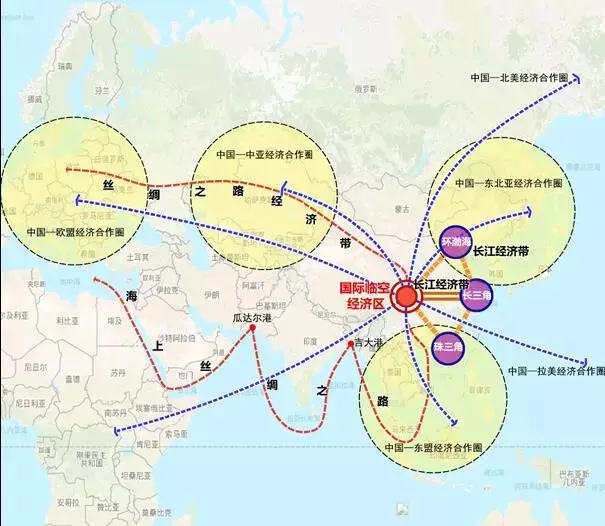
According to the Outline, it is necessary to actively integrate into the national "One Belt, One Road" strategy, form an open highland that intersects with the Yangtze River Economic Belt, give play to the role of an international aviation hub as a gateway to foreign exchanges, accelerate the opening-up function and system construction of the airport economic zone, and comprehensively build an important carrier of Sichuan’s international exchanges.
According to the Outline, Chengdu Tianfu International Airport Airport Airport Economic Zone should focus on radiating Europe, Central Asia, West Asia, South Asia and Southeast Asia, increase the opening and encryption of international routes, promote the optimization and improvement of domestic and international transit route networks, actively integrate into the European economic circle and the Asia-Pacific economic circle, promote high-end cooperation, and build an important gateway and carrier for China’s opening to the west. Strengthen extensive cooperation with countries along the Belt and Road in the fields of energy resources, electronic information, equipment manufacturing, aerospace and engineering construction, and vigorously develop service trade. Strengthen international capacity cooperation with ASEAN and South Asia. Expand cooperation with Japan, South Korea and Australia in the fields of electronic information and agriculture. At the same time, we should seize the opportunity of establishing China (Sichuan) inland free trade zone, and actively strive for the scope and policies of the free trade zone to cover the airport economic zone. Planning and construction of special customs supervision areas such as comprehensive bonded zones, and strengthening the interactive development with Chengdu High-tech Comprehensive Bonded Zone.
The strictest environmental access system will be implemented in the region.
The Outline also puts forward requirements on improving public services and municipal facilities, strengthening ecological environment protection, and improving institutional mechanisms.
In terms of public services, the region will strengthen the construction of international public service facilities, attract internationally renowned educational institutions, encourage the adoption of a 12-year dual-track teaching system at home and abroad, provide international education services for children of foreign professionals, Hong Kong, Macao and Taiwan, and returnees, and scientifically arrange primary and secondary schools and kindergartens. According to the standard setting of third-class hospitals, we will build a comprehensive hospital integrating medical, teaching and research with international standards.
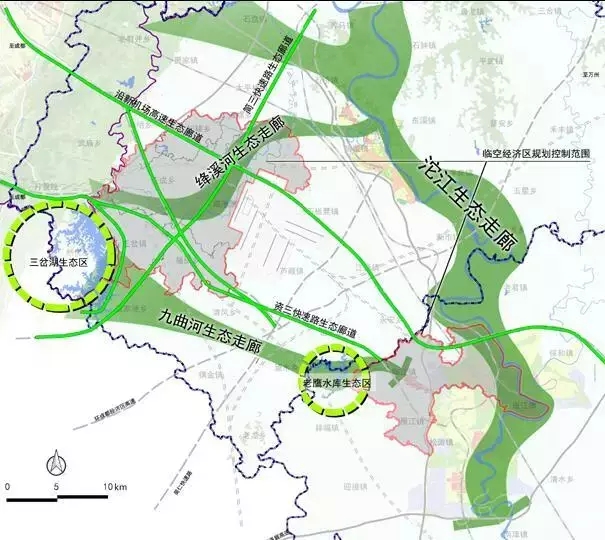
In terms of ecological environment protection, the Outline clearly states that it is necessary to rely on natural water bodies such as Tuojiang River, Jiangxi River and Jiuqu River to restore the ecological environment of rivers, intensify the restoration of afforestation and wetlands, and build an annular ecological corridor. Construction of landscape forest belts along traffic trunk lines such as New Airport Expressway, Ziyang-Sancha Lake Expressway, Jianyang-Sancha Lake Expressway and Sancha Lake Tourism Expressway will form a green corridor running through the region.
At the same time, the functions of flood control and drainage and ecological landscape should be coordinated, and ecological wet areas along the river, riverside leisure areas and pastoral scenery areas should be planned and built to create a landscape along the river with suitable forest and water. Implement the action plan for the prevention and control of air, water and soil pollution, and implement the most stringent emission standards.
In addition, the noise control plan will be strictly implemented, and greening projects in high-noise areas will be implemented through the use of noise barriers and other technologies and the construction of large-scale noise reduction green belts to reduce the noise impact around airports and access roads. Villages and towns and existing sensitive facilities in the airport noise-affected area shall be relocated and avoided in an orderly manner. Coordinate the land use around the airport, and mainly develop aviation logistics services and comprehensive bonded industries.
For major construction projects included in the Outline, the EIA approval procedures will be implemented according to law, the strictest environmental access system will be implemented, the impact of important infrastructure construction on the ecological environment will be strictly controlled, cultivated land and forest land will be occupied as little as possible, and ecological restoration and compensation will be carried out in time. Strengthen the control of acoustic environment and prevent traffic noise pollution. Reduce energy consumption and pollution emissions, and slow down air pollution. (Some pictures are from online reporter Dong Jiao)