"Not Stop" is not the second "Medicine God"

This year’s Venice Film Festival, although the film list is not better than in previous years because of the epidemic, the summit of Chinese director Zhao Ting has given fans a shot in the arm. In terms of Chinese films, it is also quite exciting.
The first furnace incense in the non-competition unit is well-made, and the horizon unit even broke out the annual Chinese film masterpiece "Not Stop".
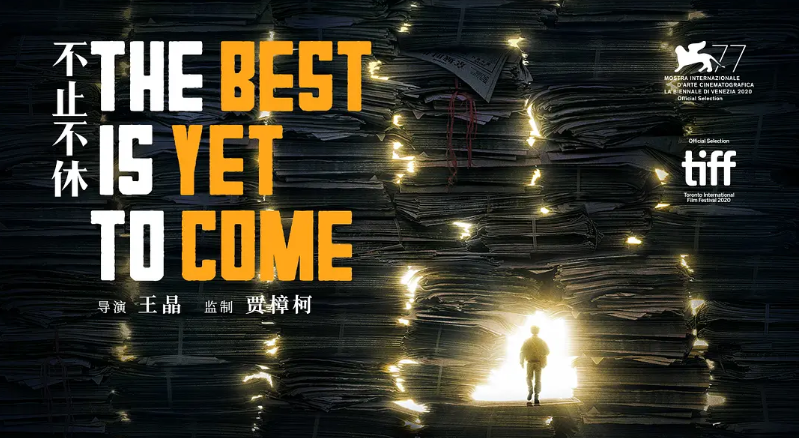
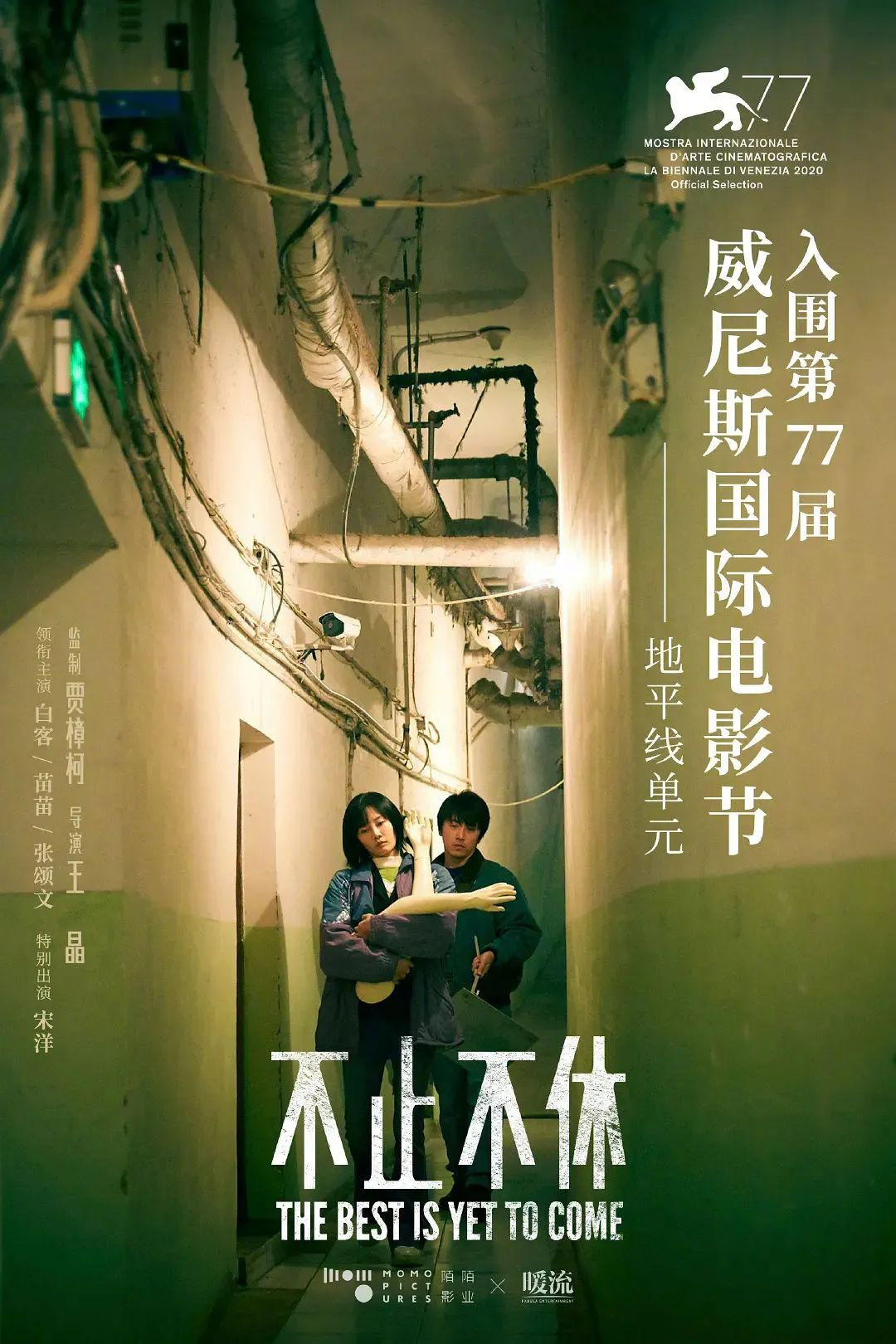
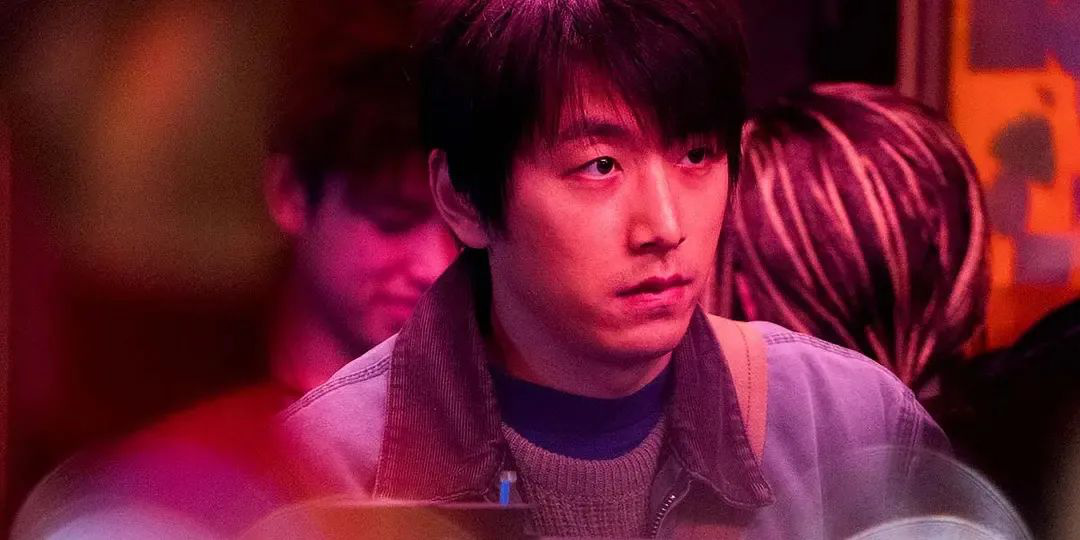
The story of "Not Stop" took place in Beijing in 2003. The film created the image of a young journalist. The young man named HanDong couldn’t stand the dull life in his hometown and took his girlfriend to Beijing to look for opportunities.
With no background in high school, he is a young man full of ambition. He is passionate about journalism and hopes to uphold justice with a pen.
By mistake, he met a well-known journalist Huang Jiang and became an intern reporter. During his internship, he came across an illegal industrial chain case of selling blood.
Just as he sneaked in as an investigative reporter, he found that things were far from simple, and there were more secrets behind the illegal industrial chain.
Whether to succumb to the simple concept of good and evil and run for the rude system, or to listen to the inner voice and speak for the 100 million discriminated HBV carriers. After his struggle, he made up his mind.
This film "More than Endless" is the debut of Jing Wong, a mainland director born in 1980s. Jing Wong used to be Jia Zhangke’s executive director, and he also got Jia Jiaban’s full help in this new project.
When talking about Jia Zhangke’s influence on him, director Jing Wong said: "I decided to make a film because of his influence, but now I have become a teacher and friend. He has provided me with a lot of memories of Beijing in 2003 in this film, but when it comes to implementation, it is based on trust, just like Huang Jiang and HanDong."
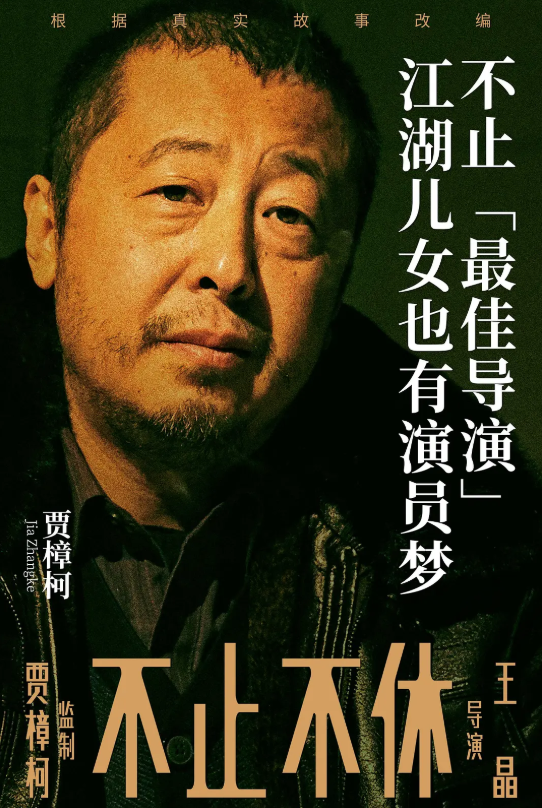
Because "Not Stop" pays attention to 100 million hepatitis B virus carriers, it brings them human care, and is regarded as a companion piece of Dying to Survive by many moviegoers.
Talking about the relationship between "Drug God" and this film, Director Jing Wong said: "When" Drug God "was released, the script had been written in the third edition. After thinking, the original script was not changed because of the release of" Drug God ".Since the audience likes realistic themes so much, it is better to have one more."
The following is an exclusive interview with director Jing Wong in Ifeng film.
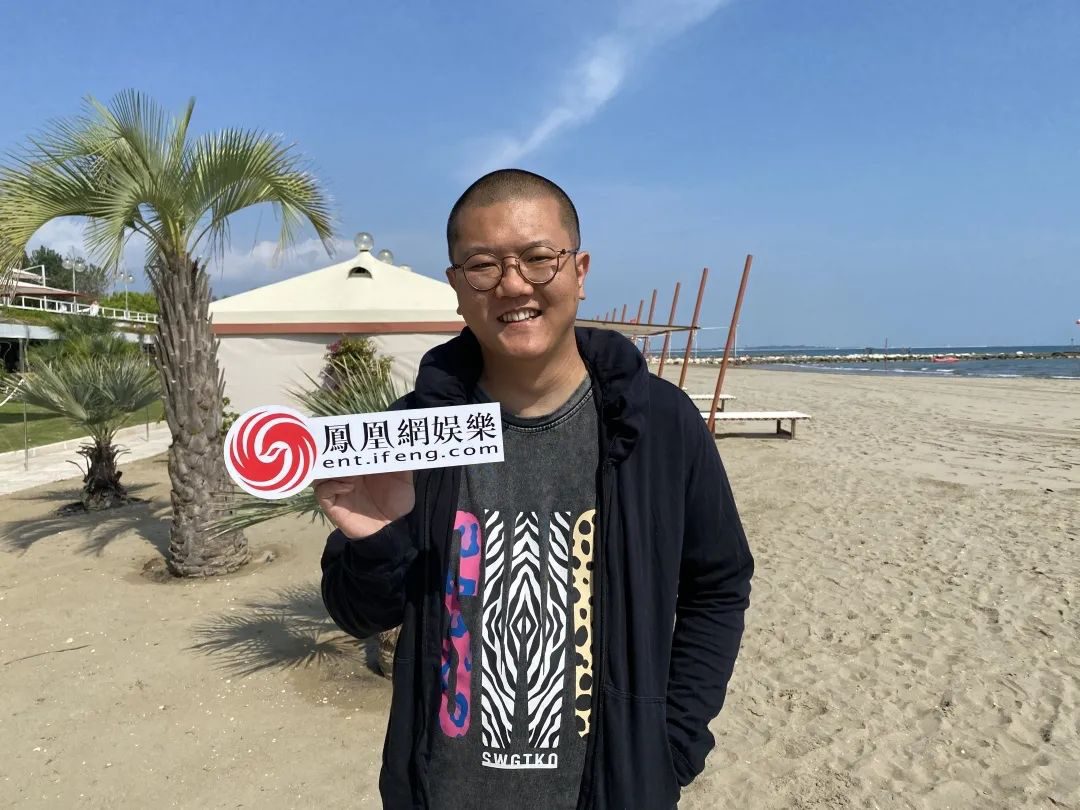
Ifeng film: What is the impact of this year’s epidemic on film post-production?
Jing Wong:Thanks to the technological progress of the times, although it has an impact, it can also be overcome.
This film was finished two weeks before the Lunar New Year. At the beginning of January, Matthew and I watched all the materials together in Beijing. I told him that we would meet again in Beijing on the seventh day after the Lunar New Year and start to cut the film formally. After that, he went back to Taipei and I went back to Hainan for the New Year. We haven’t seen each other until now.
Matthew is a technical madman. When he saw that Hollywood editors shared a way of remote editing, he found a set of equipment. At that time, we thought that the COVID-19 epidemic would soon pass. I didn’t think it was particularly important to cut movies remotely, because there was no way to communicate directly with each other, but later I found that I couldn’t resist it.
Not only editing, but also the communication between me and the composer on the Internet. Some lines are recorded on Apple phones, which is a brand-new experience for Zhang Yang. He has been doing it all his life, and it is the first time to record sounds like this.
Ifeng movie: This year’s COVID-19 epidemic and the SARS epidemic in 2003 in the story seem to form a clever intertextuality?
Jing Wong:This year’s epidemic is a very unexpected thing. When we want to write the story of 2003, I try to avoid SARS as much as possible. It is a sudden thing, and it is not the key I want to discuss. I didn’t expect to catch up with COVID-19 again after the film was finished.
During the epidemic, I was very anxious to brush the news every day, and my work was affected. Every time I see a piece of news, I will send it to Matthew to discuss with him the specific significance of doing it.
It really made me rethink the meaning of this film, but I don’t want to exaggerate the emotions about the epidemic.
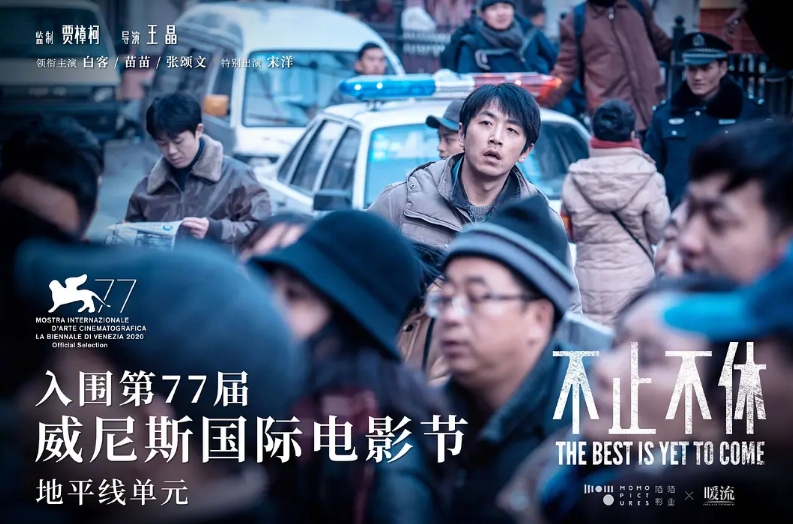
Ifeng film: The film needs to reproduce Beijing in 2003, and the urban space of Beijing has changed a lot after more than ten years. How do you find the feeling of Beijing at that time?
Jing Wong:When I first came to Beijing to study in 2003, it was the first time I left home and came to a new city, but when I was ready to shoot, my first reaction was to avoid Beijing.
I know that filming in Beijing is more difficult, and many producers have suggested to me that the current crew rarely starts in Beijing.
At that time, I walked around the cities in North China, and went to Shijiazhuang to look for the old buildings in the 1980s and 1990s. I wanted to go around and see the environment of the community. My local friends directly took me to some old factories with five or six floors, all of which were brick buildings. This is the past of that city.
But Beijing is different. Many large-scale institutionalized residential buildings on the Second and Third Ring Road in Beijing, with more than 20 floors, have existed for more than 20 years.
Until then, I found that Beijing is completely irreplaceable. It is a continuously attractive city, and the population will keep gathering there, so I decided to overcome the difficulties and shoot in Beijing.
Shooting in Beijing is more difficult than shooting in Beijing. Although we can find a place to restore the memories of the times, there are still many practical problems, such as roads, transportation and vehicles, which are different from those in Beijing more than ten years ago.
But there are always ways to solve the problem. When shooting, we choose a lot of space off the ground, such as the overpass, and try to focus on people’s faces and use people’s mental outlook to restore that era.
Ifeng movies: In Chinese movies, there are not many works that present a social event by news drama. Why did you choose this angle at first?
Jing Wong:In fact, we didn’t want to make a movie from the perspective of news drama at first.We just want to describe a man with spiritual strength, who happens to be a journalist.What we can’t avoid is his professional attributes, so since we have decided to make this film, we want to do it well.
There have always been news movies abroad, but there are very few in China. If we want to recover to the extreme, we need to visit many newspapers.
Because the space of newspaper office is not the space in routine life memory, I know what hospitals and schools are like, but newspapers don’t go at ordinary times. I am a person who needs a realistic foundation very much.
The newspaper also supported us and invited us to visit. We went to many newspapers in Beijing to collect the bits and pieces and restore them to today’s scene.
Including what a real reporter should be like, we should visit as many journalists and friends as possible, and many people no longer do newspaper industry, because this industry is already a past industry.
But when they talk about their former glory and ideals, they are still radiant, and I will try my best to restore their state.
Ifeng film: This film must have encountered many difficulties from shooting to release, which one made you feel the deepest?
Jing Wong:On the implementation level, the biggest difficulty is the change of the city, and the change of China is really too fast.
Let me give you an extreme example. We should have shot in a village in the suburbs of Beijing, and we chose the location in August. By the time we really started shooting, the place was completely new. There are many such examples.
I think this progress is good, and we can’t refuse to accept this change in the city just because we want to make movies. Production designer also advised me to accept it, which is its best appearance, so we stayed there to shoot.
Ifeng film: judging from the audience’s reaction, the positioning of this film is very close to Dying to Survive?
Jing Wong:The screenplay of this film started in 2017. Half of our films are narratives of drifting north, and the other half are narratives of journalists’ profession.
After the script was written to the first draft, The Later Us directed by Rene Liu was released. When we finished watching it, we found that there were many details similar to the script we finished, so we decided to change the script and change the similar parts.
I wrote the script for more than half a year. When the third draft was completed, it was released in Dying to Survive, and the response was enthusiastic. We went to see the film again. After watching it, everyone came back to discuss whether to change the script, and finally decided not to change it.
Dying to Survive is an excellent film, and Muye Wen is also an excellent director. The whole film is perfect from production, narrative structure and balance.
But my first judgment at that time was that it happened so coincidentally and unfortunately. From another level, this is a good thing.
It’s not just pan-entertainment movies that the audience likes. The audience is willing to accept realistic movies and look at what’s happening around them. I think this is a good thing, so why don’t we make more movies like this?
Ifeng film: You have worked with director Jia Zhangke for many years. Can you tell me about his help to this film?
Jing Wong:The earliest art film I could get in touch with, or the author’s film, was a VCD in kraft paper bags that became popular in my high school, that is, pirated copies. The earliest movies I saw with the author’s expression were all through this way.
I know Khiesz Lovsky, david lynch, Jin Jide and director Jia Zhangke from there. I decided to study movies and make movies, which was also influenced by his movies.
We come from the same place, our cultures are very close, and the distance between his home and mine is only one hour by car.
At first, he was my idol. Later, I was able to work with him. After that, the two of us developed a relationship of being a teacher and a friend. It takes time for people to reach a tacit understanding and recognition.
Specific to this film, he helped me restore the picture of Beijing in 2003. I was still in school in 2003, and I didn’t have such a clear judgment about the society and the times. He happened to be filming The World in Beijing at that time.
In my first edition of the script, he gave me a lot of memories about Beijing in 2003, and his memory was bigger than mine.
When it comes to filming, his help to me is more based on letting go of trust, which is a bit like the relationship between Huang Jiang and HanDong.
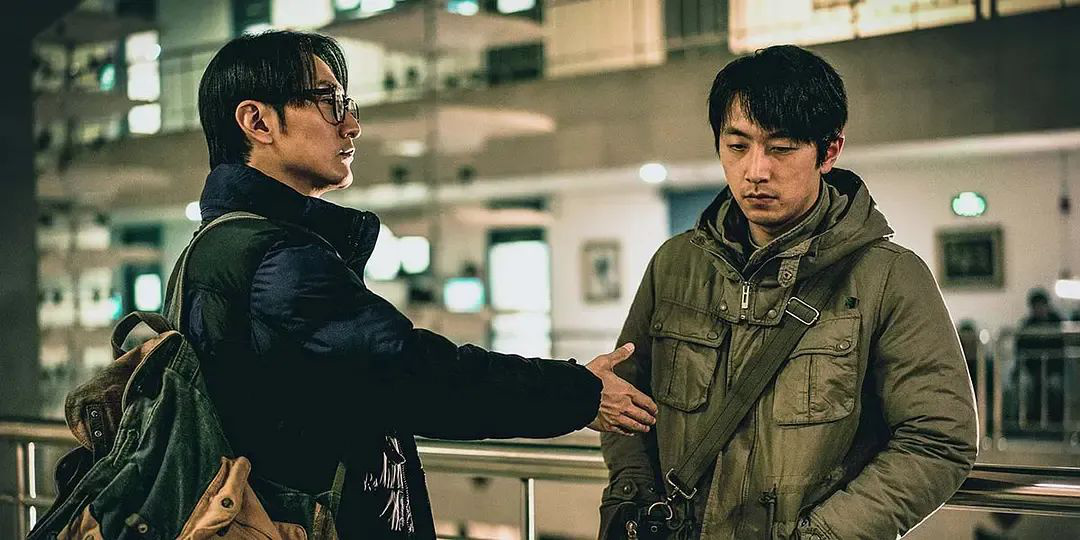
Ifeng Movie: What attracted you to Ke Bai and made you decide to choose him to play the role of HanDong?
Jing Wong:After writing the script, I know this is a story about an ordinary person. I need an image of an ordinary person. I hope the audience will believe that this person is as ordinary as each of us.
But his spiritual strength, his efforts to change, may be something that many of us don’t want to do or think about. I hope this spiritual strength can bring you.
Some people think this is a movie about a civilian hero. He is a civilian, but I don’t think he is a hero.
When HanDong did all kinds of things, he didn’t take me as a starting point. He just chose the option that he thought was right and that he thought was consistent.
He is not a result-oriented thing. He has never thought about changing the fate of many people. His starting point is to return to his heart. He wants to do the right thing, even if he loses everything he has gained. This is courage and this is strength.
When I decided to make an ordinary movie, Ke Bai was the best choice, and Wang Dachui was too ordinary to be ordinary.
Friends around me will also discuss that Ke Bai is a comedian who is active in the Internet, which may be different from the role setting.
But I was thinking,Isn’t it a labeling behavior to evaluate an actor like this? Isn’t our movie telling a story that shouldn’t be labeled?
Ifeng movie: There are shots of pens and newspapers flying in the movie. Why did you design it like this?
Jing Wong:That paragraph didn’t appear in the original script, but I thought of it when I was sitting in the car and trying to sleep.
We are telling the story of 2003, and I have read many news reports about 2003. At that time, the most important thing for China was that SARS and Shenzhou 5 reached space.
I think the country has a grand narrative, and space has always been associated with dreams. Yang Liwei’s entry into space is a challenge to the impossible sight and the realization of grand dreams.
This is close to the theme of our movie. People want to realize their dreams, and Han Dong wants to be a reporter. People around them don’t think what happened to Yang Liwei is infectious, but it is very important for HanDong himself. I want to connect my dreams through that scene.
Yang Liwei’s successful entry into space, the grand narrative of this country at the dream level, and HanDong’s personal dream of becoming a journalist and realizing his ideals, I think both should exist. And this is not a comparative or antagonistic relationship.
Because I think the progress of a country or a society is actually composed of such people with brave hearts, idealism and dreams, and it is a lattice and a face relationship.
Ifeng movie: In the movie, the first event that HanDong experienced was a mine accident, and the second event was hepatitis B. Some viewers mistakenly thought that there was a third event, thus forming a parallel structure. However, this is not the case, so why did you spend so much ink on this mine accident?
Jing Wong:After I finish this movie, I will invite my friends to watch it. After watching it, I will ask them a question: "Is this a movie about people or an event?" Everyone’s feedback is different.
But my original intention is to tell a movie about people, so his growth process is essential, his first experience, his first attempt, his process of surpassing himself, which is gradual.
There is a correlation between coal mines and hepatitis B. The key point is how people measure their own value.
Ifeng movies: When movies present a social problem, they hope to promote the social progress. However, from time to time, some people regard this behavior of criticizing the society as "washing the dirty linen in public". What do you think of this view?
Jing Wong:I think good and bad are very rude judgments. Whether it is movies, life or society, we must accommodate the existence of diversity. It is difficult to judge a thing simply by the binary standard of good or bad. We can’t simply define a social level through movies.
When I went to the Film Academy, I had to hand in a lot of homework every week, racking my brains for scripts and short film assignments. Now, in this era, there are many news events when I turn on my mobile phone.
If I had these when I was in college, I wouldn’t worry about writing stories at all. China is too big, and there are many stories happening every day. We can only intercept, present and describe our living environment.
In this process, it is good that we are kind in our hearts. This is what we should do. Don’t cater to other people’s ideas with a purpose.
Ifeng movie: What’s the situation of Dragon Mark?
Jing Wong:The procedure was a bit hasty during the epidemic, but everything went smoothly.