"Bears Come Back to Earth" released a New Year song to wish the Spring Festival good luck.


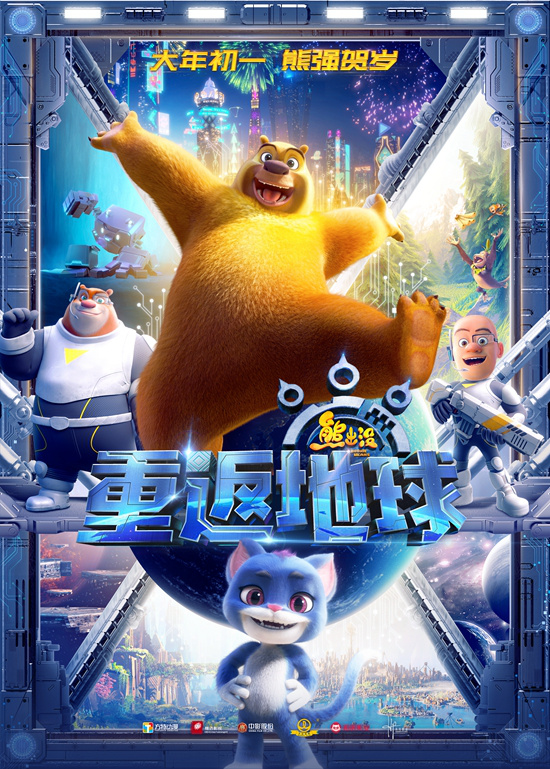
1905 movie network news The eighth big movie in the series "Bears haunt", which will be released nationwide on the first day of the New Year in 2022 (February 1), has recently released the new year’s greeting music MV. Xiong Er not only plays the leading role in the movie, but also makes a joyful voice for the first time in the New Year song, and sends good luck to the national audience with happy songs. In the MV released at the same time, Xiong Er danced the lucky New Year’s flavor in an awkward way to greet everyone, celebrate the Spring Festival in the Year of the Tiger with the whole family, and look forward to the Spring Festival reunion.

Xiong Er sang Happy New Year Divine Comedy.

Send a full New Year greeting.


Less than a week before the New Year in 2022, on the occasion of bidding farewell to the old year and welcoming the new year, Bears Come Back to Earth released a new year greeting song, Lucky Xiong Er, which was performed by two bears, offering the most auspicious New Year wishes of "red envelopes in the left hand and gold ingots in the right hand" for the upcoming Year of the Tiger.
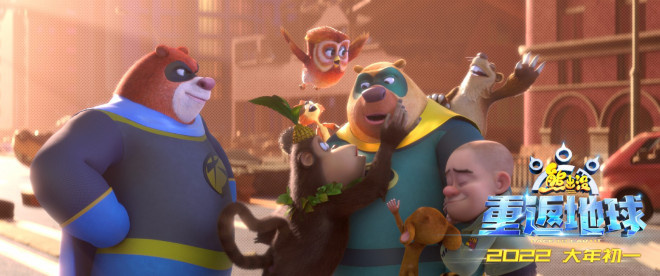

"Lucky Xiong Er" is not only a family happy New Year’s greeting song with full flavor, but also the first personal theme song of Xiong Er in the series of "Bears Come and Go", with Xiong Er’s voice actor and voice director Zhang Bingjun singing heartily. The opening melody is full of rhythm and atmosphere, and the lyrics of happy New Year greetings are skillfully combined. The magical brainwashing tunes, dancing guitars and bright drums reveal a happy holiday atmosphere. Through humorous singing, Xiong Er sends the most sincere New Year wishes to everyone, "I wish you all the best and a happy family", and both big friends and children can reap luck and happiness. Xiong Er’s simple and honest appearance is very pleasing, and his cute voice makes people laugh. While conveying joy, it also depicts the unique celebration and exultation in China, and accompanies everyone to have a happy Spring Festival.
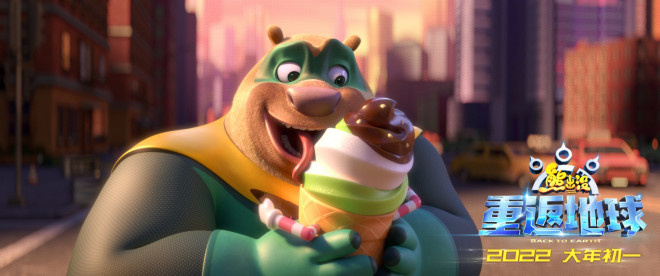

Xiong Er, an omnipotent hero, even contributed a high-burning rap to the song, and gave every audience a series of auspicious lyrics such as "Congratulations on getting rich", "Happy family", "All the best", "Prosperous fortune" and "Good luck".
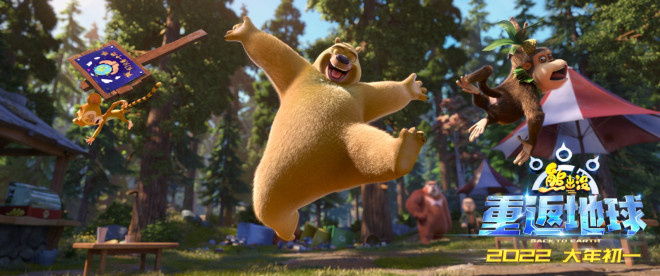
 

"Lucky Dance" Challenge Begins

The whole family studied, danced and enjoyed the fun together.


In the MV, Xiong Er twisted his lovely dance steps, and his face was filled with happy and funny expressions, swinging from side to side to bring the audience a "lucky dance" full of joy from head to toe. On the occasion of the upcoming Spring Festival reunion, this jubilant and joyful dance will become a dance program that attracts countless children to imitate in thousands of family living rooms and is expected to become the "atmosphere" of the Spring Festival.
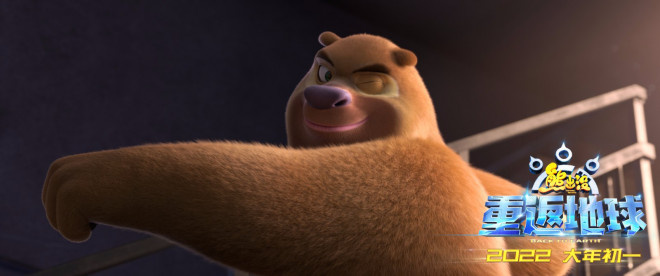
 

Bear infested double platform ultra-high opening and closing points

Good luck in the New Year, Happy Year in the Tiger.


The annual bear haunt is a wonderful memory of the Spring Festival, and the series of big movies "Bear haunt" has brought countless laughter and reunion to thousands of families in China during the Spring Festival. This year’s "Bears Coming Back to Earth" takes "going home" as the main story line, and the new character "Abu" has to return to his hometown across time and space, which is also the meaning of the film to send a happy whole year to the audience and friends who watch movies with the whole family in the new year.


After screening, "Bears Come Back to Earth" scored super high on both Cat’s Eye and Taobao Film platforms: Cat’s Eye 9.4 and Taobao Film 9.5. The joyful and interesting characters and the warm and touching story of "going home" make big friends and children laugh with tears and resonate with each other. Everyone calls them "happy and moved" and "high-burning and inspirational". The audience praised: "Bear infestation means knowing how to laugh the whole audience over", "Burn some tears and Qi Fei, and it will be warm and healing".
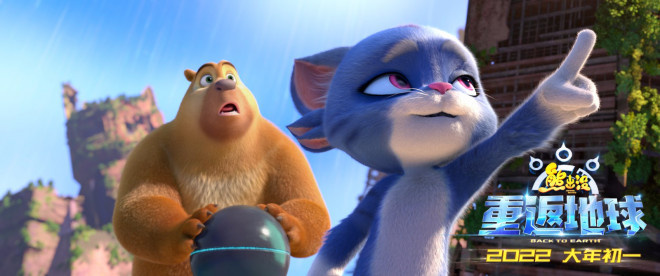

When talking about the meaning of the title of "Return to Earth", the creative team said: "Home is a harbor in society. When the Spring Festival comes, it is especially strong for us in Chinese to go home and reunite. Home is our eternal root. I hope that no matter where we are, the audience and friends can gain joy and touch from the film, and the family will have fun in the Year of the Tiger. "
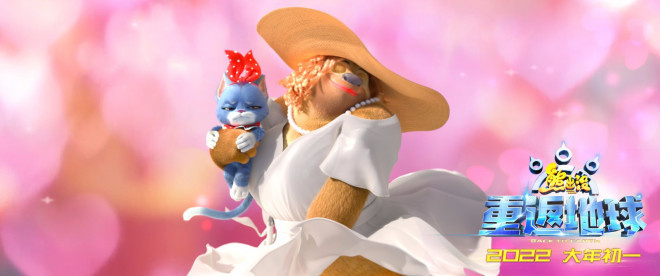
 

Xiong Qiang celebrates the New Year, which is standard for Chinese New Year. The film "Bears Coming Back to Earth" will be released in the national cinemas in 2D and 3D versions on the first day of February, 2022. At present, the national pre-sale has been started. "Xiong Qiang Group" is looking forward to family reunion with the audience in the cinema to start a warm, happy and auspicious new year!

The Ministry of Education announced the list of national competitions for primary and secondary school students.

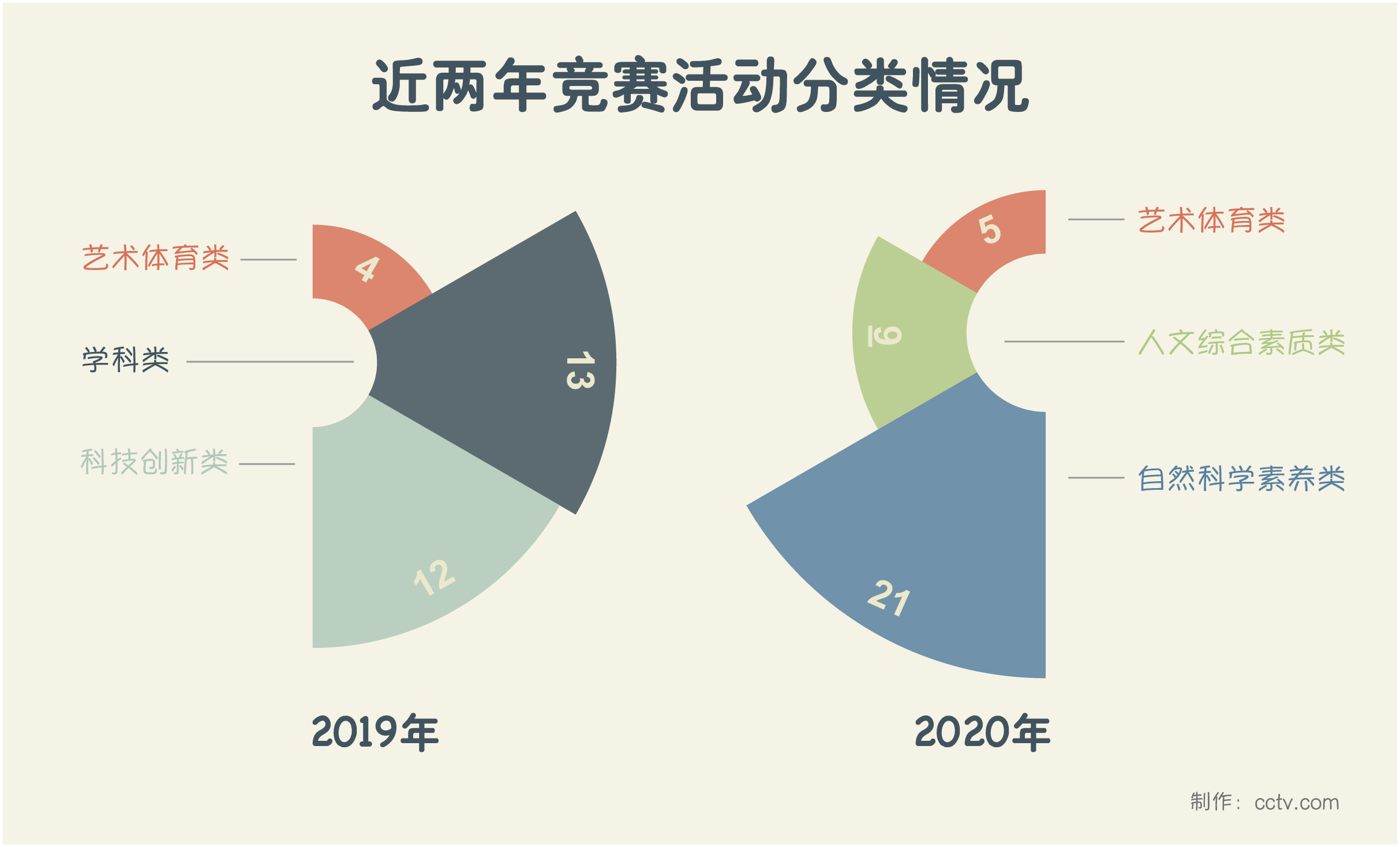
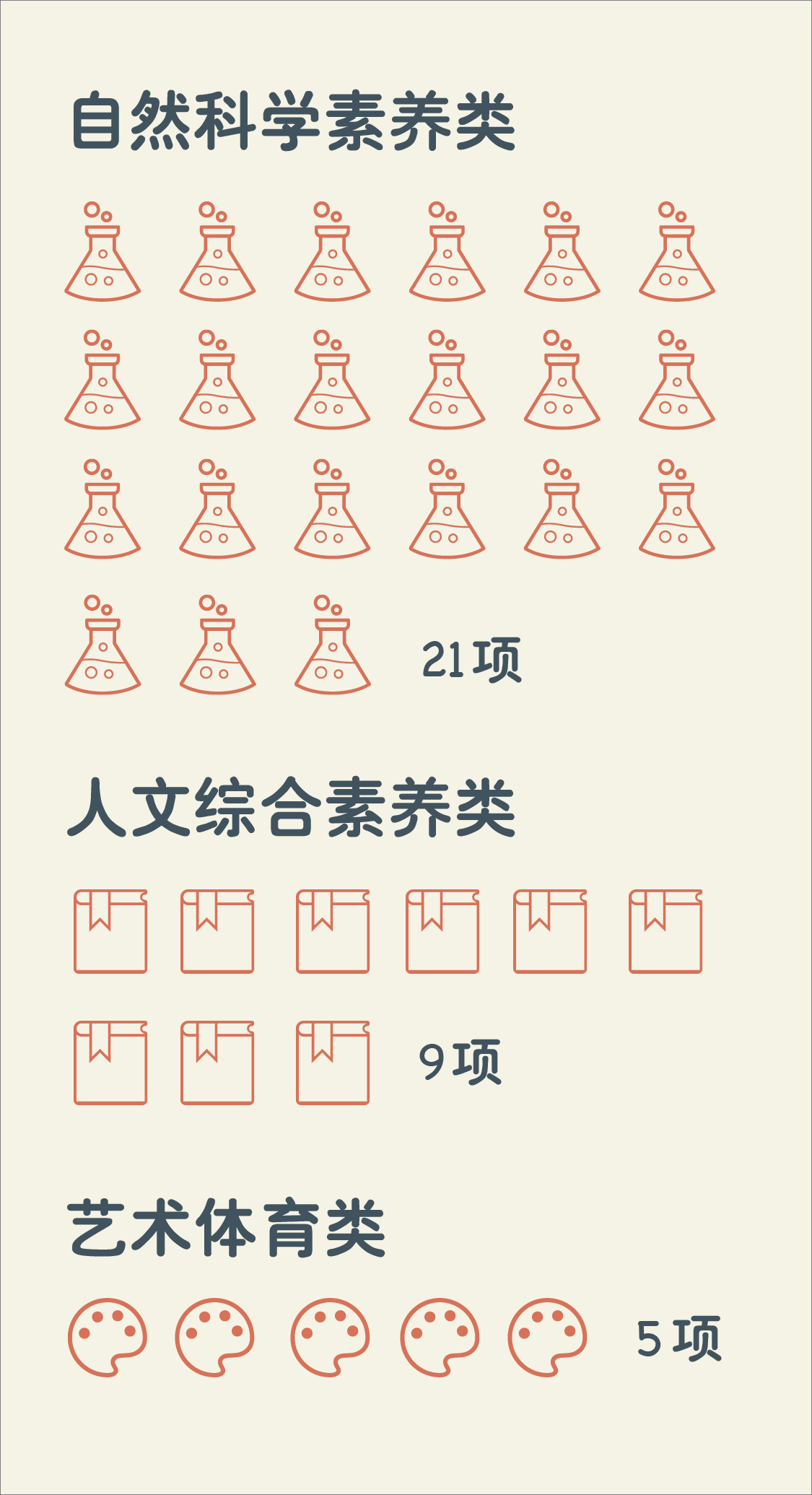
Cctv news(Reporter Kan Chunyu, Xu Yeqing): Recently, the Ministry of Education announced the list of national competitions for primary and secondary school students in the 2020-2021 school year. There are 35 events in the list, which are divided into three categories: natural science literacy, comprehensive humanities literacy and art sports.

The national middle school students’ mathematics, physics, chemistry, biology and informatics Olympic competitions were all selected, but the national youth science and technology innovation competition, which was still on the list last year, was not included.

In the compliant competition, innovation, Olympics, popular science, artificial intelligence, and robots are high-frequency words in the name of the competition.

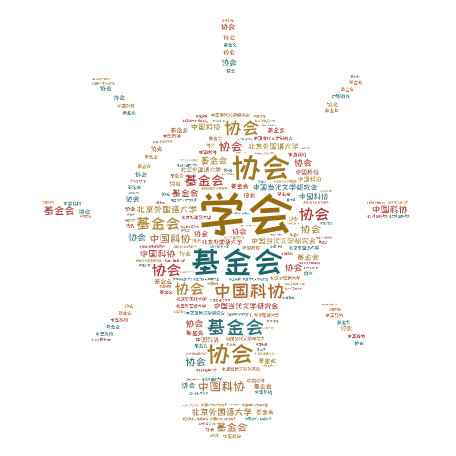
The organizers of the contest are mostly societies, associations and foundations. China Association for Science and Technology undertakes 4 events and is the organizer of the most national competitions. China Contemporary Literature Research Association ranked second with two events. Beijing Foreign Studies University, which hosted the FLTRP Cup National Middle School Students’ Foreign Language Literacy Competition, is the only institution in the list.

Of the 35 competitions, only one is not for senior high school students. Compared with last year, vocational high schools and technical secondary schools also have their own compliance competitions.

In order to control all kinds of illegal competition activities and reduce the extracurricular burden of primary and secondary school students, in September 2018, the Ministry of Education issued the "Administrative Measures on National Competition Activities for Primary and Secondary School Students (Trial)". It is pointed out that local education administrative departments at all levels, primary and secondary schools and various educational institutions are not allowed to organize or organize primary and secondary school students to participate in competitions for primary and secondary school students with the words "National", "National" and "Greater China" outside the list, and are not allowed to provide venues, funds and other conditions for illegal competitions. The "Measures" particularly emphasize that the competition and the results produced by the competition are not used as the basis for enrollment in primary and secondary schools.

In April 2019, the Ministry of Education announced the first batch of lists, including 29 events.

Compared with the list in the past two years, CCTV reporters noticed that the classification and activities of the competition have changed a lot.

In 2019, the competition activities were divided into scientific and technological innovation, discipline and art and sports. In this year’s list, except for art and sports, the other two items were changed to natural science literacy and humanities comprehensive quality.

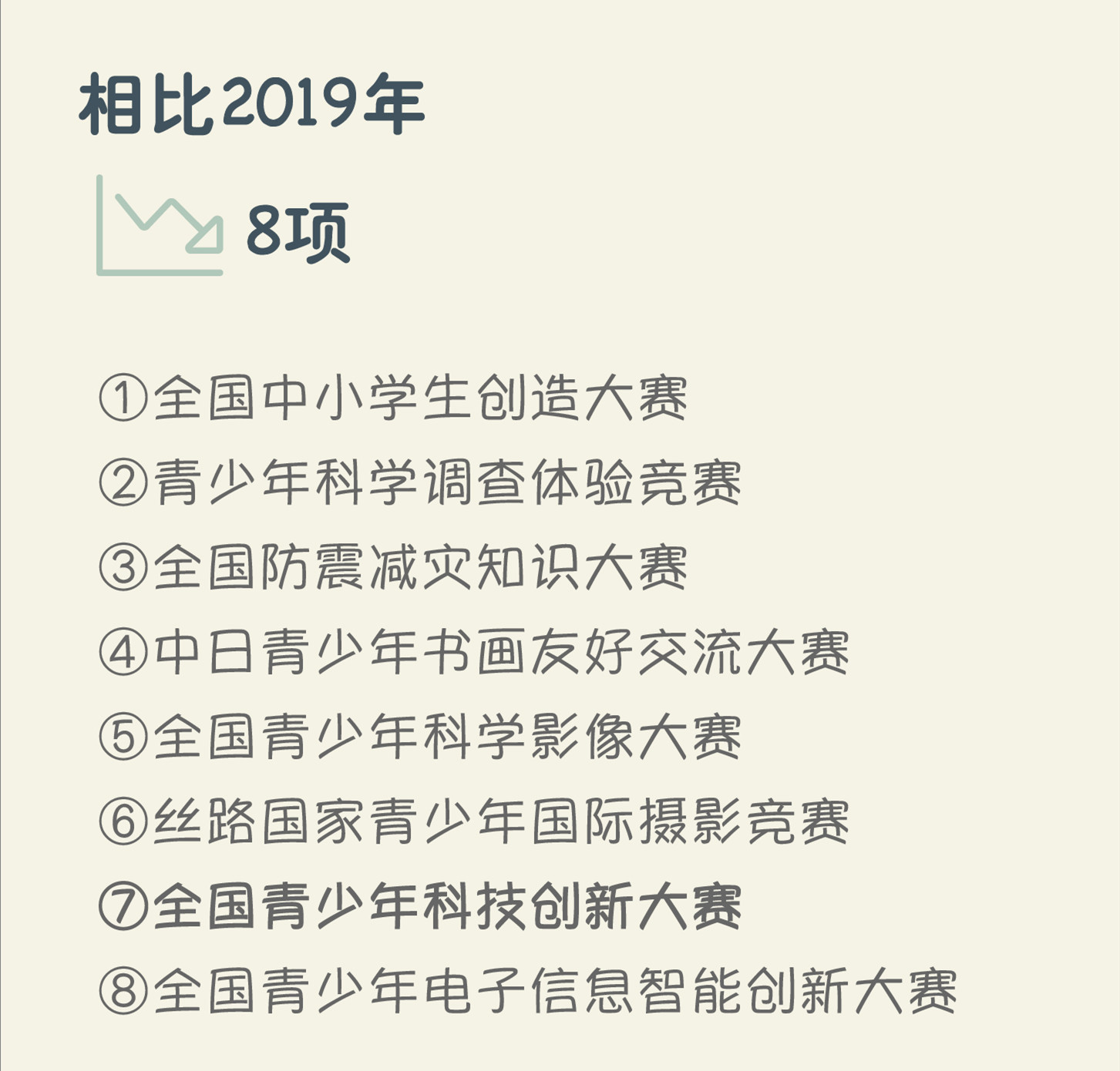
Eight competitions have disappeared from the list, including this year’s National Youth Science and Technology Innovation Competition, which was caught in a dispute over the falsification of award-winning works.

In July this year, the sixth-grade primary school students’ research on cancer won the third prize of the 2019 National Youth Science and Technology Innovation Competition, which was questioned by the public. The General Office of the Ministry of Education issued the Notice on Further Strengthening the Management of National Competition Activities for Primary and Secondary School Students. It is pointed out that some problems have been exposed in the recent organization of individual competitions, such as lax evaluation and suspected parents doing it for them, which have caused adverse effects. The Notice requires strict competition evaluation, and once again emphasizes that any competition award will not be used as the basis for enrollment in the basic education stage.

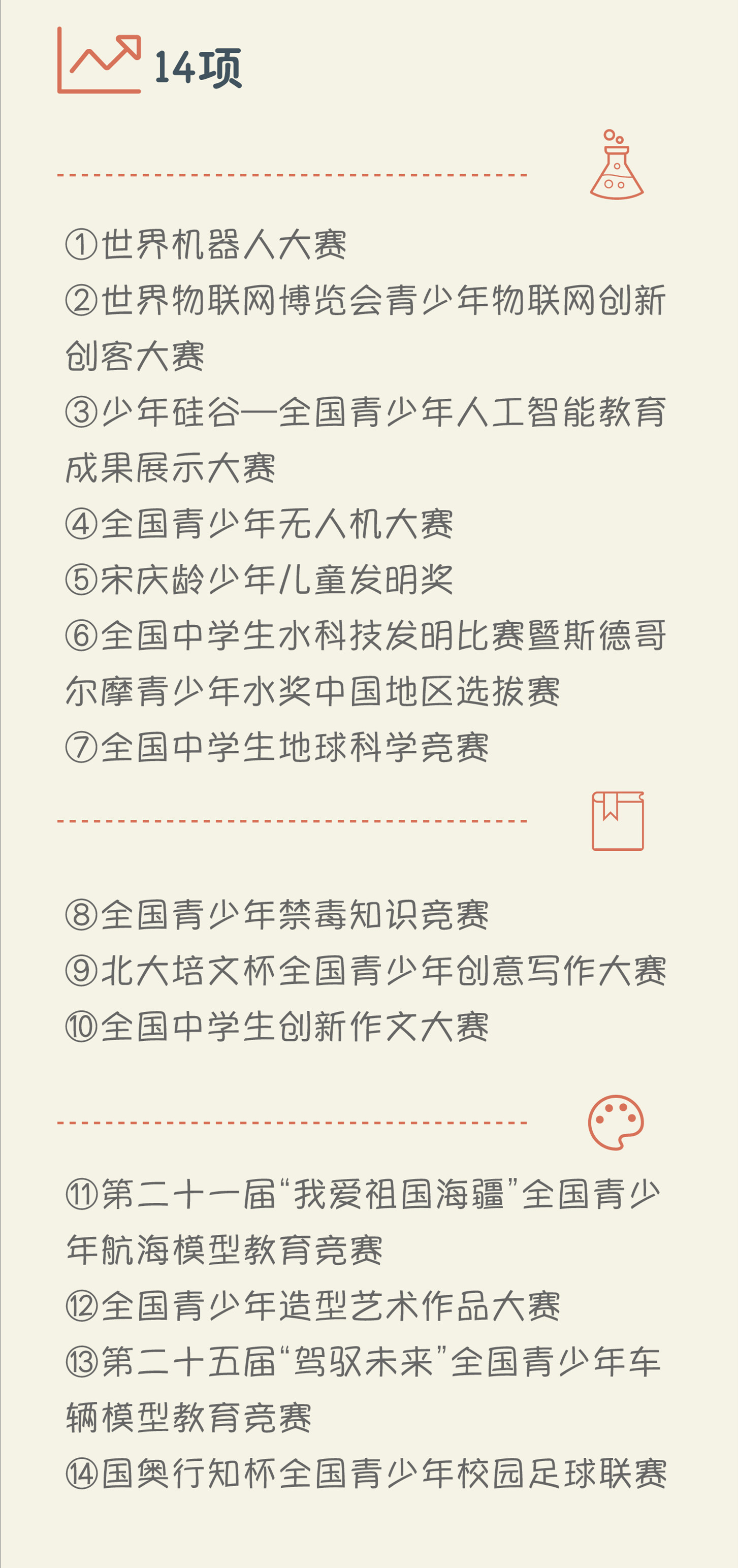
Meanwhile, 14 events have been added to the list.

It is reported that the list of competition activities released this time was declared by the organizer independently, and was finally determined after the Ministry of Education organized experts to conduct evaluation, publicity and review.

The Ministry of Education requires that competitions entering the list should adhere to public welfare, not for profit, and achieve "zero fees".

The GDP of 30 provinces in the first quarter was released: the growth rate of 22 provinces was higher than that of the whole country, with Xinjiang leading the way.

  On April 28th, with the release of the GDP data of Jilin Province in the first quarter by Jilin Provincial Bureau of Statistics, 30 provinces have published the local economic performance in the first quarter.

  According to the GDP data, the gross domestic product (GDP) of China in the first quarter of 2022 was 270.178 billion yuan, up 4.8% year-on-year and 1.3% quarter-on-quarter compared with the fourth quarter of 2021. In the first quarter of this year, the only provinces with an economic aggregate exceeding 2 trillion yuan were Guangdong and Jiangsu, which were 2,849.879 billion yuan and 2,785.9 billion yuan respectively, with Guangdong increasing by 3.3% and Jiangsu by 4.6%. The gap between the two economies has narrowed from about 120 billion yuan in the same period last year to 63.9 billion yuan.

Data of GDP and per capita disposable income of each province in the first quarter of 2022 Source: Local Statistics Bureau and National Bureau of Statistics: The Paper.

  Data of GDP and per capita disposable income of each province in the first quarter of 2022

  Source of data: Local statistical offices and National Bureau of Statistics: The Paper.

  Shandong, with the third largest economic aggregate in China, had a GDP of 1,992.68 billion yuan in the first quarter, up 5.2% year-on-year, only 7.3 billion yuan away from 2 trillion yuan.

  In the first quarter of 2022, there were 11 provinces with GDP exceeding one trillion, including Guangdong, Jiangsu, Shandong, Zhejiang, Henan, Sichuan, Fujian, Hunan, Hubei, Anhui and Shanghai, three more than those in the first quarter of last year, namely Hubei (1,080.466 billion yuan), Anhui (1,034.77 billion yuan) and Shanghai (100.07 billion yuan).

Data of economic situation of provinces in the first quarter of 2022 Source: Mapping by local statistical bureaus: The Paper.

  Data of economic situation of provinces in the first quarter of 2022 Source: Mapping by local statistical bureaus: The Paper.

  In terms of GDP growth rate, the growth rates of Xinjiang (7%), Jiangxi (6.9%), Fujian (6.7%), Hubei (6.7%), Guizhou (6.6%), Shanxi (6.5%), Hunan (6%) and Hainan (6%) are over or equal to 6%. There are 22 provinces whose growth rate exceeds the national level (4.8%), including Inner Mongolia (5.8%), Heilongjiang (5.4%), Sichuan (5.3%), Yunnan (5.3%), Gansu (5.3%), Shandong (5.2%) and Anhui (5.2%). Beijing’s GDP in the first quarter increased by 4.8% year-on-year, which was the same as the "national line".

  Judging from the per capita disposable income of residents, in the first quarter, the per capita disposable income of residents nationwide was 10,345 yuan, a nominal increase of 6.3% over the previous year, and a real increase of 5.1% after deducting the price factor. Compared with the "national line" of 10345 yuan, the per capita disposable income of residents in Shanghai, Beijing, Zhejiang, Jiangsu, Tianjin, Guangdong, Fujian and Shandong has outperformed the national level.

  The per capita disposable income of residents in Shanghai and Beijing in the first quarter was above 20,000 yuan. Shanghai topped the list with 22,663 yuan, a year-on-year increase of 5.2%. Among them, the per capita disposable income of urban residents was 23,772 yuan, an increase of 5.0%; The per capita disposable income of rural residents was 12,891 yuan, an increase of 7.4%.

  After Beijing followed Shanghai, the per capita disposable income in the first quarter exceeded 20,000 yuan, ranking second. According to the data released by Beijing Bureau of Statistics, the per capita disposable income of residents in the city in the first quarter was 20,630 yuan, a year-on-year increase of 5.3%. Among them, wage income increased by 6.6%, net operating income increased by 0.4%, net property income increased by 0.6% and net transfer income increased by 5.2%.

Per capita disposable income of residents in each province in the first quarter of 2022 Source: National Bureau of Statistics Cartography: The Paper

  Per capita disposable income of residents in each province in the first quarter of 2022 Source: National Bureau of Statistics Cartography: The Paper

  Ranked third in the income list is Zhejiang, whose per capita disposable income in the first quarter reached 19,366 yuan, only one step away from the 20,000 yuan mark. Although Chongqing has not exceeded the "national line", it has passed the 10,000 yuan mark, which is 10,240 yuan.

  Judging from the growth rate of per capita disposable income of residents, the growth rate of Hubei and Guizhou is outstanding, exceeding 7%, and that of Fujian, Anhui and Sichuan is about 7%. In addition, the growth rates of Jiangxi, Hunan, Chongqing, Hebei, Jiangsu and Shandong provinces outperform the whole country, exceeding 6.3%.

  (This article is from The Paper, please download the "The Paper" APP for more original information)

  Editor in charge: Zheng Jingxin

  Proofreading: Liu Wei

  The Paper reported: The Paper, 4009-20-4009, and may not be reproduced without authorization.

  I want to report it.

  Keywords > > GDP in the first quarter

  106

  collect

  Tracking: GDP in the first quarter