Tik Tok online celebrity, settled in the online sales platform, a new attempt of "68-year-old" green food.
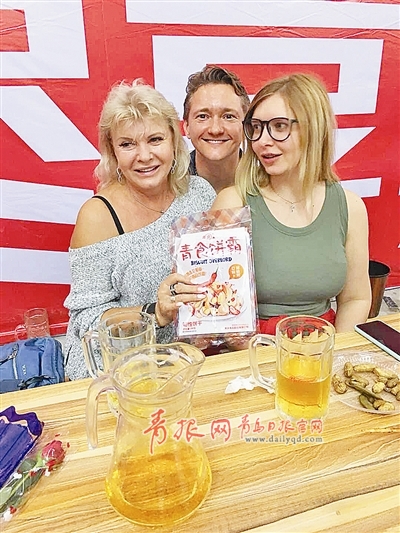
During this year’s Tsingtao International Beer Festival, "Ha Beer with Clams and Green Food Bakers" became a hot topic, and the new green food "Green Food Bakers" is expected to become another online celebrity product after spicy strips and turkey noodles.
When it comes to green food, many Qingdao people still remember calcium milk biscuits, but green food has already targeted the young market to implement differentiated competition. With the strength of innovation, technology and capital, Green Food strives to achieve the leap-forward development of "rebuilding a green food in three to five years".
Diversified innovation and development
At present, the situation of enterprise merger and integration in the domestic biscuit industry is becoming more and more obvious. Shandong Zhenghang, Xu Fuji and other enterprises have been merged by foreign capital, and Fujian Dali, Guangdong Jiashili and Hubei Guangyuan Food have also possessed the strength of sustainable development. The 68-year-old green food has obvious market advantages in Shandong Province. The production and sales of calcium milk biscuits are the first, and Haiyou brand peanut butter is exported to more than 20 countries and regions. Green food brand sorghum molasses was once a specialty of Shandong, and pineapple beans were introduced to Qingdao in 1983 … But for young consumers and consumers outside the province, green food still needs to continue to work hard on brand awareness and loyalty.
The key to "recreating a green food" lies in innovation, and green food’s understanding of product innovation is diversification, high-end and differentiation. "The competition in the food industry is fierce, and it is developing in a green, safe and healthy direction. It has long been impossible for a product to cover the whole world, and many of our new products have completely jumped out of the original category." Zhong Ming, secretary of the Party Committee and general manager of Qingdao Food Co., Ltd., said that green food combines the hot spots of market demand, focuses on product diversification and age diversification, and regards R&D as the main body of enterprise innovation and development, and cultivates the leading force of continuous innovation and benefit growth.
At the Qingdao International Beer Festival, the cute group of "Green Food Bakers" launched a special interaction with tourists, such as "Looking for the Crappy Clam Monster", and "Green Food Bakers" also became the online celebrity of social platforms such as Tik Tok. In recent years, Qingshi has successively launched new products such as Qingdao flavor boxed series calcium milk biscuits, 336g boxed series, 48g cup series, proper fruit Zi series and breakfast series calcium milk biscuits. This year, it plans to launch five flavors of leisure biscuits, Belgian flavor biscuits and other new products, striving to recreate superior products and provide consumers with more choices.
With the upgrading of domestic consumption, Qingshi has paid more attention to building mid-to high-end multi-brands. Green food keeps pace with the times, innovates high-end calcium milk products and high-end leisure categories, focuses on explosions, focuses on brands and profits, and implements differentiated competition for young target markets. In the next three years, Qingshi will update a 800 biscuit production line in Licang factory area in combination with the GMP certification requirements of infant complementary food products, enter the infant product market, and actively reach the standards of large modern food enterprises.
In addition to product innovation, Qingshi has continuously increased investment in online and offline markets to promote brand image upgrading. Outside the province, Qingshi has strengthened the launch of new products. This year, it has focused on breaking through the northeast market, steadily increasing the sales proportion of peanut butter and snack biscuits in the regional market in South China, and at the same time, it has started construction in Anshun Qingshi Food Co., Ltd., the first factory outside Qingdao, which will radiate to the southwest; In the province, build the benchmark market of JIAOZHOU office, break through the blank area in southwest Shandong and consolidate the market advantage. In addition, Qingshi has taken the initiative to join the new retail. At present, it has online retail platforms such as Tmall flagship store, Taobao enterprise store and JD.COM flagship store, as well as self-operated Qingshi WeChat WeChat official account and WeChat applet.
Automation and intelligent transformation
Scientific and technological innovation and management improvement have provided solid support for the strategic goal of "recreating a green food". On the one hand, Qingshi improves the operation efficiency, comprehensively improves the production capacity and reduces the production cost by accelerating the implementation of automatic and intelligent transformation of technical equipment; On the other hand, we will deepen the reform of internal mechanisms and pay close attention to production safety and quality safety.
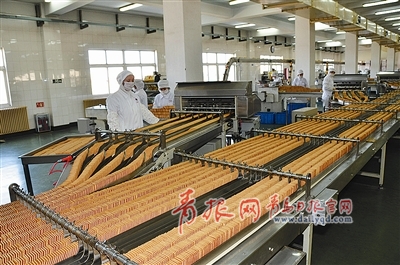
A few years ago, Zhong Ming was deeply touched when he visited the BMW factory in Germany. "There are two thousand robots in the whole workshop, and there are two workers in total. The extensive application of mechanization and intelligence is very shocking. I have been thinking about how green food can reach this level since I came back." He calculated an account for the reporter. If two new production lines save 30 people through intelligent transformation, the labor cost will be reduced by more than 2 million yuan a year.
With the support of Huatong Group, Qingshi strives to integrate smart equipment, information technology and traditional manufacturing in the production process. Since 2017, Qingshi has accelerated the construction of intelligent automatic production lines, actively tried to use intelligent manipulators and robots to reduce the labor intensity of employees, improve production efficiency and product quality, and strive to solve the contradiction between production and sales. To this end, Qingshi will purchase a new 1200 automatic and intelligent biscuit production line and a M3000 peanut oven, speed up the construction of automatic packaging line, take the peanut butter automatic basket loading manipulator that has been implemented as a pilot, and continue to implement "machine substitution" in key positions in personnel-intensive processes.
Green food also started from the reform of internal mechanism and system, and proposed to benefit from management. Zhong Ming said: "In the past, there was a big problem in biscuit production. It took two hours to warm the oven before production and one hour to cool the oven after production. When warming the oven, labor, energy and raw materials were wasted. Originally, both production lines were operated in single shifts, and finally they were adjusted to run in two shifts for 24 hours, which greatly improved the production efficiency. "
Start the IPO process as soon as possible
March 12, 2018 is an important day. Qingshi shares were officially listed on the New Third Board with the stock code of 872387, which is one of the important achievements of Huatong Group in cultivating enterprises to go public.
The road of green food listing can be described as bumpy. As early as 1992, green food was listed as the first batch of joint-stock pilot enterprises in Shandong. Since the end of the 1990s, green food has been committed to listing, but it is in an intermittent state for various reasons. Until 2011, the listing of Qingshi shares was put on the agenda again after Qingdao Yiqing Company was included in Huatong Group.
"Landing on the New Third Board is a new journey for Qingshi Co., Ltd. to start capital operation, and it is also a new course for progress. We have seen that the vast majority of successful enterprises are listed companies, and they can develop rapidly with the help of capital acquisition, mergers and joint ventures. " Zhong Ming said that through the docking and integration with the capital market, it will speed up the improvement of the distribution of sales markets inside and outside the province, promote the integration and innovation of the two industries, and strengthen the research and development of new products.
From the performance point of view, the profitability of green food is quite eye-catching. The 2017 annual report shows that the operating income of green food is nearly 442 million yuan, an increase of 4.7% over the same period of last year; The net profit attributable to shareholders of listed companies was 47.4721 million yuan, an increase of 17.67% over the same period of last year; The basic earnings per share was 1.43 yuan, compared with 1.21 yuan in the same period last year. In the first half of this year, the revenue of green food continued to grow, especially the profit increased significantly compared with the same period of last year, setting the best result since the factory was established.
Landing on the New Third Board first, and then rushing to a higher level capital market, the listing route of Qingshi is very clear. Starting this year, with the assistance of Huatong Group, Qingshi will continue to sort out all the work, realize the company’s shares in the national share transfer system for small and medium-sized enterprises from the basic level to the innovative level as soon as possible, start the IPO process of the company’s shares as soon as possible, and carry out equity financing through fixed increase in due course for merger and expansion of reproduction, improve the automation and intelligence level of production equipment, increase production capacity and lengthen the industrial chain.
(Qingdao Daily/Qingdao View/Qingbao. com reporter Zhou Xiaofeng correspondent Liu Wei)


