Charity donation is for tax deduction? You may think too much!


Tourists visit Chengyang Village, Yinzhou District, Ningbo City, Zhejiang Province, which is an important node of Ningbo’s "most beautiful boutique route". Xinhua news agency

Tourists visit Hongcun Village, yi county, Huangshan City, Anhui Province. Xinhua news agency

Liaohe cultural tourism scenic spot in Liaoning province, where tourists are intoxicated by flowers. Xinhua news agency

Huanglongdong Scenic Area in Zhangjiajie City, Hunan Province held the "Pastoral Market Celebrating Autumn Harvest" activity. Xinhua news agency
The Mid-Autumn Festival meets the National Day, and the eight-day holiday has become a good opportunity for people to visit relatives and friends and travel. Popular cities and scenic spots are crowded with people, and rich cultural tourism activities around the country create a rich festive atmosphere, and the "Golden Week" tourism market is hot. This holiday season, diversified demands such as outbound travel and rural travel are intertwined, leading the market with new trends such as sports events and concerts. Facing the peak passenger flow in the tourist season, how can the cultural tourism industry enrich product supply, improve service quality and bring people a more comfortable and warm journey experience?
Holiday passenger flow hits a new high: long-distance travel becomes the main tone of travel
On September 15, the railway department sold tickets for the first day of the holiday, and the voice of "difficulty in grabbing tickets" appeared on the Internet, and tickets for many popular destinations even "second light". According to China Railway News, the number of tickets sold on September 15th reached 22.877 million, a record high in a single day. From September 27 to October 8, the national railway is expected to send 190 million passengers, and the average daily passenger seating capacity is expected to increase by 18.5% compared with the same period in 2019.
During the 8-day "extended version" holiday, the two major travel needs of returning home to visit relatives and traveling are superimposed, and tickets for scenic spots, hotels, air tickets and train tickets are hot. Dai Bin, president of china tourism academy, believes that the Mid-Autumn National Day holiday will be far more popular than in 2019 and last year. It is estimated that over 100 million people will travel every day in eight days.
Li Yujuan, a post-90s generation from Tianjin, made a holiday travel plan as early as one month ago, and planned to visit Zhangjiajie, Fenghuang Ancient City, furong town and other scenic spots with friends from Changsha, Hunan, to enjoy the natural scenery and experience the national culture and festival customs of Tujia and Miao nationalities. "We lived in the diaojiao building of Tujia nationality, learned to dance with the local people and experienced making cakes. We had a good time, and the trip behind us was richer and the journey would be more exciting." She said.
According to the data of Ctrip platform, the booking volume of domestic tourism products during holidays increased by nearly five times year-on-year, among which Beijing, Shanghai, Chengdu, Hangzhou, Guangzhou, Xi ‘an, Chongqing, Nanjing, Shenzhen and Changsha were the most popular, with inter-provincial travel orders accounting for 73%, up by ten percentage points compared with the same period in 2022. According to the report released by Tongcheng Travel, during the Mid-Autumn National Day holiday, the popularity of related tourism products in Xinjiang, Xizang, Qinghai, Ningxia, Heilongjiang and other provinces with long-distance travel increased by more than 300% year-on-year.
Go on road trip, which has a higher degree of freedom, is also booming this holiday season, and many car rental platforms are booked enthusiastically. Mr. Shi, who runs a tourist car rental business in Urumqi, Xinjiang, said that in the past month, many tourists have come to consult models suitable for self-driving routes such as the Northern Xinjiang Ring Road and the Southern Xinjiang Ring Road, and the National Day orders for many off-line trains in Urumqi have already been fully booked.
"This year’s Mid-Autumn National Day holiday, people’s cultural leisure and tourism needs have been released in a centralized manner, and different types of consumption are very strong." Liu Simin, vice president of Tourism Branch of China Future Research Association, said.
Recently, various places have launched a wealth of cultural tourism products and activities to benefit the people, further encouraging cultural tourism consumption. For example, the Guangzhou Cultural Tourism Bureau issued a new round of cultural tourism coupons with a total amount of more than 10 million yuan; Hubei released a "big gift package" for visiting Hubei, including more than 50 million yuan in subsidies for cultural travel coupons, more than 300 scenic spots with preferential tickets, and more than 100 free and preferential policies for specific groups such as college students.
In August this year, the Ministry of Culture and Tourism announced the resumption of the national travel agencies and online travel enterprises to operate the third batch of outbound group tours for China citizens to relevant countries and regions. So far, the number of destination countries and regions on the three lists has expanded to 138. On September 13th, Thailand announced a five-month visa-free policy for China tourists. These policies have enabled the outbound travel market to recover rapidly. The "Travel Forecast Report for the Eleventh Holiday in 2023" jointly issued by various departments and platforms believes that as the first long holiday after the outbound travel is basically fully liberalized, outbound travel will usher in a spurt of growth, and the overall order for outbound travel will increase by nearly 20 times year-on-year.
Sports tour in the countryside is hot: the trend of slow tour reflects the new fashion of consumption
The Asian Games in Hangzhou, which is in full swing, spans the whole "Golden Week" and brings a national sports tourism boom. "Traveling with the events" has become a new fashion.
In this regard, Zhejiang released 12 theme roaming corridors of "Poetry and Painting, Vigorous Zhejiang in the South of the Yangtze River", and 10 Asian Games cultural tourism boutique routes of "Watching the Asian Games and Traveling in Zhejiang". Hangzhou issued millions of "Asian Games Cultural Tourism Gift Packages", and various cities in the Yangtze River Delta issued Asian Games preferential policies and cultural tourism coupons. Many platforms also launched Asian Games tourism products.
Global sports fans have gathered in Hangzhou, and many landlords of local homestays have prepared a guide to the Asian Games and a City Walk strategy for their guests. Xiaojin, who runs a homestay in Gongshu District, Hangzhou, posted on the social platform that he hoped to provide free accommodation for volunteers and torchbearers of the Asian Games for three days. "The Asian Games will be held in Hangzhou, and we are willing to do our best to contribute." Xiaojin said that she also prepared Asian Games-specific postcards for guests staying during the Asian Games.
"Since the beginning of this year, sports events have played an obvious role in promoting culture and tourism. Competitors and spectators have visited local scenery, tasted local food and felt ‘ Pyrotechnic gas ’ And ‘ Cultural flavor ’ It has effectively promoted the integration and development of culture, sports, tourism and other industries in a wider scope and in a deeper degree. During the Chengdu Universiade, the number of international air ticket bookings to Chengdu increased by nearly 10 times year-on-year, and the number of hotel orders increased by nearly 26% compared with the same period in 2019. " Ma Li, deputy director of the Industrial Development Department of the Ministry of Culture and Tourism, pointed out.
The fiery Hangzhou Asian Games ignited more people’s enthusiasm for sports tourism. Ma Li introduced that the cultural tourism department will take advantage of the situation to stimulate the vitality of the integration of cultural and sports tourism, and take major events as an opportunity to build a new scene of cultural and sports tourism integration. At the same time, a series of mass sports activities, such as surfing on the sea, gliding at high altitude, outdoor adventure, village super-sports, village platoon, village BA, village dragon boat and city stroll, have become new supplies for the integrated development of culture, tourism and sports, so that sports can add vitality to tourism and meet the people’s physical and mental health needs through the integration of cultural, sports and tourism.
"Today, the host city of sports events ‘ Slow travel ’ Very popular, consumers can explore urban cultural blocks and cultural tourism consumption places in depth after watching the game. With the trend of micro-tourism, slow tourism and light vacation, many people choose to explore the streets and lanes of surrounding cities with friends and family, camp in the suburbs of the city, and stay in rural villages to experience the pastoral scenery. " Cheng Chaogong, chief researcher of Tongcheng Research Institute, said that these phenomena verified the trend of domestic tourism from recovery to rapid growth, and reflected the general trend of popularization and diversification of tourism consumption.
In the autumn season, melons and fruits are ripe, and when they enter the countryside, every household is busy basking in autumn. Ms. Angelie Liu, who lives in Jinhua, Zhejiang Province, took advantage of the holiday to take her children to Baihe Village in Yuexi, a suburb of the city, live in a quaint homestay, experience farming picking and lotus root mining, and enjoy a pleasant holiday life surrounded by green waters and green mountains.
On the eve of the Mid-Autumn National Day, the Ministry of Culture and Tourism launched 149 national rural tourism boutique routes with the theme of "orange, orange and green rural scenery". Many tourists like Angelie Liu followed the recommended route into beautiful countryside, enjoyed the rich and gorgeous rural autumn scenery, tasted the scenery and delicacies in the north and south of the Yangtze River, experienced the diversified and integrated rural tourism format, and felt the new era and beautiful rural scenery.
There are many reverse peak-shifting games: service reception in scenic spots meets the test.
Every holiday, there will always be a phenomenon of tourists getting together in popular destinations. Some consumers began to pay attention to the concepts of "unpopular" and "peak shifting" and went to niche destinations.
According to the data provided by Ctrip, the orders of Jingdezhen, Anji, Nanyang, Changzhou, Foshan, Huai ‘an, Yanji, Jieyang, Antu and other minority destinations all exceeded the National Day in 2019 by more than double. Besides, compared with the congested popular cities, Yichun, Baise, Wushan, Lincang, the world tea source and Pu ‘er, the capital of China’s coffee, are the best choices to avoid the peak passenger flow.
"September in previous years was the off-season, but in September this year, the occupancy rate of our hotel reached more than 80%, and the holiday rooms were already fully booked, and we were busy." Xiang Xiang, the landlord of Yanji’s homestay, said, "Here, tourists can taste Korean specialties, wear traditional Korean costumes, punch in at Tumen Port, climb Changbai Mountain to enjoy Tianchi Lake and appreciate the unique charm of this small town."
A concert, a delicious food, and a marathon can all be reasons for "walking away". According to incomplete statistics, during the Mid-Autumn National Day holiday this year, there were nearly 100 concerts and music festivals in various places, and "traveling with performances" became the "wind vane" for many young people to travel. Many second-and third-tier cities, such as Jingdezhen, Foshan, Changzhou and Handan, have held music festivals and other activities. According to the data of Flying Pig Platform, the cumulative booking volume of hotels in these cities has increased nearly five times year-on-year.
In this regard, Dai Bin suggested that while young people choose reverse tourism and find their favorite minority tourist destinations, they must pay attention to choosing safe scenic spots with guaranteed services, and they should not put themselves in danger by exploring new things for a while.
Liu Simin pointed out that in order to alleviate the pressure of holiday tourism products in hot spots, all departments should make plans in advance, do a good job in guiding and receiving tourists, optimize the reservation measures for scenic spots, strengthen the support of transportation and other supporting services, and ensure a safe and orderly market.
"The escalating demand of consumers tests the coping ability of the tourism industry. Tourism practitioners should deeply understand the characteristics of different customer groups, promote product innovation, dig deep into high-quality cultural resources, and comprehensively enhance the depth and thickness of the tourism experience." Cheng Chaogong pointed out, "We should fully satisfy consumers’ in-depth travel and ‘ Localization ’ Experience the new needs, deepen the integration of performing arts and music festivals with tourism, attach importance to the development of the night travel market, and create a colorful travel experience. "
Ma Li pointed out that the combination of tourism and leisure and cultural experience has become an important trend, and "poetry" and "distant place" are achieving a better connection, which has effectively promoted the rapid recovery of transportation, accommodation, catering and commerce. The cultural tourism department will further develop new products and formats, innovate cultural tourism scenes, create a cultural tourism consumption ecology that is jointly built, managed and shared by the government, merchants, residents and consumers, advocate civilized tourism, improve service quality, and create quality and temperature tourist destinations around the needs of different consumer groups such as children, youth, the elderly and families, so that "fireworks", "cultural flavor" and "civilized style" can go hand in hand.
(Reporter Lu Yuanzhen)
Xi ‘an, China Broadcasting Network, May 13 (Reporter Zhang Jiaqi Feng Weiyu) In 2018, the Beijing Higher People’s Court made a final judgment on the patent infringement case of Xidian Jietong v. Sony, and ordered Sony to stop the infringement and compensate Xidian Jietong for a total of 9,103,400 yuan. This case is also called "the first case of standard essential patent in China" by the industry. In fact, such difficulties and challenges are only the epitome of Shaanxi’s "Belt and Road" construction. "Shaanxi is participating in ‘ Belt and Road ’ The construction started early, but it also faced many challenges. " Ma Lili, deputy dean of the School of Economics and Management of Northwest University, said that Shaanxi should make full use of resources, seize development opportunities and become an important fulcrum along the Belt and Road to boost the overall national strategy.

Opportunities and challenges
Founded in 2000, Xidian Jietong is a provider of network security protocol technology and solutions.
On March 28, 2018, the Beijing Higher People’s Court made a final judgment on the patent infringement case of Xidian Jietong v. Sony Wireless LAN Security Standard (WAPI), dismissed the appeal, upheld the original judgment of the first instance, and ordered Sony to stop the infringement and compensate Xidian Jietong for its economic losses and reasonable expenditure on rights protection totaling 9,103,400 yuan. The case of Xidian Jietong v. Sony is also called "the first case of standard essential patent in China" by the industry. At present, the patent infringement case of Xidian Jietong v. Apple is still under trial in the Higher People’s Court of Shaanxi Province.
In these two patent infringement cases, both Sony and Apple filed a request for invalidation of the patents involved with the Patent Reexamination Board of the State Intellectual Property Office. In 2016 and 2017, the Patent Reexamination Board made a conclusion to maintain the validity of the patents involved.
Li Yi, patent director of Xidian Jietong Company, said that the benefits of a network security protocol technology will be about 10 to 15 years later, while the patent is only valid for 20 years. In this case, the efficiency of intellectual property protection is very important. A realistic challenge is: globally, the ICT field is the hardest hit area where large enterprises abuse their dominant position. They implement patent reverse hijacking, and the problem of customers bullying stores is more prominent.
In this regard, Huang Zhenhai, deputy general manager of Xidian Jietong Company, said: "In the application and protection of intellectual property rights, we adhere to the position of treating enterprises of all sizes, Chinese and foreign enterprises and enterprises of all ownership equally. We believe in the power of intellectual property protection! "
At present, Xidian Jietong Company has signed patent licensing contracts with 70 product brand manufacturers around the world, of which nearly 40% are well-known enterprises in Europe, America, Japan and South Korea, and the products involved include mobile terminals, Internet of Things products and industrial equipment.

Increase attempts to give play to comparative advantages
On the road to the construction of the "Belt and Road", the challenges are also multi-faceted.
In 2018, Xi ‘an International Port Area set the "small goal" of running 1,000 trains in Central Europe and Central Asia, and used the PPP model for reference to determine the operation idea of "fully connecting the market, one enterprise and one line", so that powerful logistics enterprises can participate in the operation of trains by contracting lines. Liu Dan, deputy general manager of Xi ‘an land port Multimodal Transport Company, said that at present, China Merchants Group, Continental Bridge Company, Land Port Multimodal Transport Company, etc. have carried out in-depth cooperation with Xi ‘an International Port Area Management Committee in the operation of trains, and made every effort to promote the encryption of trains and jointly build a brand-new logistics hub node.
"Being able to form economic and trade cooperation requires great demand, supply and interaction, but the development scale and economic aggregate of countries along the Silk Road are small and the pulling force is limited." Ma Lili said that Chang ‘an needs to connect with more countries, including Rotterdam, Hamburg and Germany, when it is put into operation, which will also generate greater bilateral demand and supply of goods.
It is reported that this year, Xi ‘an has opened two lines from Xi ‘an to Belarus, from Xi ‘an to Russia, and from Xi ‘an to Iran (Afghanistan), and eight lines have been operated in Central Asia and Central Europe.
"In addition, agricultural products also have its unique comparative advantages." Ma Lili said that Aiju Group has achieved a level of synergy with enterprise development, regional development and national development in the construction along the Silk Road. "This is a great progress."

"At present, Aiju Group has built a phase of 300,000 tons of oil processing in North Kazakhstan, which was put into production the year before last." Liu Dongmeng, deputy general manager of Xi ‘an Aiju Group, said that the Kazakhstan government attaches special importance to this project. In addition, we can also use the "Belt and Road" Chang ‘an express lane to transport Kazakhstan’s high-quality and natural raw materials and processed flour and oil back to China.
"Love chrysanthemum group in ‘ Belt and Road ’ The reason why we can go out in construction is because Aiju Group has been creating better grain and oil, exploring better grain sources, and increasing foreign cooperation on this basis. "
A hundred schools of thought contend and a hundred flowers blossom. This year marks the fifth year of the Belt and Road Initiative and the 40th anniversary of China’s reform and opening up. The "Belt and Road" construction in Shaanxi Province is entering a new stage. Faced with various challenges, Shaanxi is striving to give full play to the new advantages of the "Belt and Road" core area and the China (Shaanxi) Pilot Free Trade Zone, actively integrate into the "Belt and Road" pattern, turn challenges into opportunities, and strive to create a new pattern of linkage between land and sea and two-way mutual aid and opening up between east and west.

Zen Tea Culture Center of Muxingu International Kangyang Resort (photo taken on April 30).
Recently, visitors walked into Muxingu International Recreation Resort in Dongfeng Yun International Recreation Resort in Mile City, Honghe Hani and Yi Autonomous Prefecture, Yunnan Province. They either enjoyed in the hot spring pool or sat on the terrace and tasted a cup of fragrant tea … This is a service platform integrating health preservation, anti-aging repair, hot spring healing, leisure vacation and artistic experience. Visitors can enjoy it and find their own healthy and leisure way.

Muxingu International Kangyang Resort Health Management Center (photo taken on April 30).
In order to make every tourist fully relaxed in body, mind and spirit, Muxin Valley International Recreation Resort skillfully integrates slow life, artistry and experience, and relies on natural resources of 4A scenic spots such as sunshine, lakes, forests and hot springs to build five recreational facilities, namely, health management center, SPA spa center, hot spring healing center, recreational sports center and Zen tea culture center, and creatively put forward "body"

Muxingu International Kangyang Resort Health Management Center Songbo Sound Therapy Area (photo taken on July 12).
Among them, the health management center is the core of Muxingu International Kangyang Resort, which is divided into eight areas: health detection area, health intervention area, singing bowl sound therapy area, aromatherapy area, hydrogen and oxygen anti-aging area, exercise health area, outdoor meditation area and body-building food area, focusing on managing customers’ physical health, mental health and social health. The project takes "health management" as the main theme, "healthy home" as the main line, and around the two cores of "ecology and health preservation", a one-stop health management service product system including green catering, health management, sports rehabilitation and butler service is established.

Health Inspection Zone of Health Management Center of Muxingu International Kangyang Resort (photo taken on July 12).
The relevant person in charge of Honghe Company of Yunnan Urban and Rural Construction Investment Co., Ltd. said that the Muxingu International Kangyang Resort project draws lessons from the international advanced experience of kangyang projects, takes the health management center as the core, and takes the kangyang environment, kangyang service, kangyang supporting facilities and kangyang residence as the system, creating a unique five-in-one health management model and creatively putting forward the concept of "healthy 4S shop", which is not medical treatment or pension in the traditional sense, but "making sub-healthy people healthy"

Muxingu International Kangyang Resort Leyang Sports Center (photo taken on July 12).

Hot spring of Muxingu International Kangyang Resort (photo taken on July 12).
Next, Yunnan Urban and Rural Construction Investment Co., Ltd. will continue to deepen the recreational industry, invest in the construction and operation of new community recreational industry projects on the basis of Muxingu International Recreation Resort, enrich the practice of Yunnan Construction Investment Holding Group Co., Ltd. in tourism, recreational and pension sectors, and inject new vitality into the development of recreational industry in Yunnan. (End)
Recently, there has been a lot of talk about the Internet of Vehicles, so I simply talk about it thoroughly. The reason is that the Internet of Vehicles is highly related to automobiles, aftermarket, media, mobile Internet, big data, cloud computing, insurance and even finance, and it is a typical cross-border industry. If you want to make a living in this industry, it is impossible not to see the food chain clearly. I know not many people can see it clearly, so I dare to throw out a version first and see where your career can be in the food chain in the future.
The top layer of any industrial food chain is the government, and the Internet of Vehicles is no exception. No matter how great your business model is, you will eventually have to pay taxes and be supervised by the government.
Because there are regulations and taxes, this means that the Internet of Vehicles has policy risks, and what to do or not to do must be seriously considered. For example, after the Internet and in-vehicle systems are connected, the Internet of Vehicles needs to be connected with the physical traffic environment outside the vehicle, which is M2M (machine-to-machine) networking. This is a typical concept of the Internet of Things. Without the virtual world, most transportation infrastructure is the assets of the government or state-owned enterprises, but without this networking, the value of the Internet of Vehicles will be greatly reduced.
The development of the Internet of Vehicles cannot be separated from the official background. There should be no objection. The leaders recommended Big Data. Obviously, the Internet of Vehicles is the basic data source of big data. Besides public transportation, it can control private traffic data, which is of great help to social security and management. The government should of course support the development of the Internet of Vehicles.
Under the government, there are four camps that covet the Internet of Vehicles. The two giants are OEMs and insurance companies, and the two younger brothers are telecom operators and mobile Internet.
Car companies will play a leading role.
There are many arguments about this. For example, a friend suggested that functional mobile phone manufacturers were replaced by smart phones in those years, but Nokia and Motorola were not the leading players in the field of smart phones. After functional cars are replaced by smart cars, GM, Toyota and Volkswagen will no longer play a leading role.
This analogy is actually a concept of stealing, because the function of mobile phone is communication, and the communication function of the Internet has replaced the traditional mobile phone, so the mobile phone manufacturers who insist on voice communication have gone from bad to worse, but the function of the car is a physical mobile tool. If the Internet can realize the instantaneous movement of human body or objects like in science fiction, then it is still possible that Apple or Google will control the car network, and they may indeed be studying this problem. But in the short term, to subvert the physical mobility function of the car itself, the Internet has no chance, which is why the car networking will still be controlled by the OEM in 5-10 years.
What’s more, the R&D cycle of automobile products is too long, R&D investment is a typical asset-oriented model, and at the same time, it is very strict under government supervision, so it is almost impossible for other formats to subvert their status. For car companies, there are many things that can be done by using the Internet of Vehicles, but the advantage of being short, flat and quick is definitely the extension of car warranty. I have to write a special article on this issue. Only by knowing the individual car condition of the car owner can we give a personalized extended warranty service pricing. Once this is realized, the customer loyalty of the after-sales service of the main engine factory will be greatly increased-I can selectively provide longer warranty service for some car owners who cherish the car during the warranty period and screen high-quality users to provide them with better replacement service.
Insurance companies are another industry that can compete with the income of car companies.I wrote earlier that car networking insurance (not the so-called insurance car networking) is promising, and insurance companies are also watching how this business will land.
All kinds of OBD car networking insurance based on afterloading are also being piloted. Judging from the urgency of using the Internet of Vehicles, I think traditional insurance companies will wait and see, because this opportunity will change their own lives, but innovative investment in the insurance industry will firmly seize this opportunity and cooperate with all parties to promote the landing of Internet of Vehicles insurance.
For car networking insurance, the user data it holds will be real big data, and insurance is just a product that sticks to users, so other services extended from it are really powerful things. For example, after auto insurance claims, the main cost will be used for car body panel repair. Previously, domestic insurance companies did not affect the car body panel repair business. For example, paint, which accounts for 25% of the car body panel repair cost, was not designated by the insurance company, but in Europe, insurance companies will designate this supplier to reduce the premium expenditure. Once the car networking insurance company operates effectively, it is logical to establish a car body panel and spray chain system at the expense end, which means that it is not impossible to control the profit of the post-market.
Telecom operators are another 100 billion-level participant, but this part related to cars is still very small, but typical operators also have its urgency.
With the popularity of traffic-based communication tools such as WeChat, the analog voice communication market of telecom operators is shrinking, and traffic management is an urgent matter. The emergence of 4G will only accelerate this demand. However, business traffic is actually more about business user time. At present, mobile phone users in China have spent a lot of time on their mobile phones, and people will have psychological problems if they extend their time.
If communication between people can’t consume traffic, the traffic potential of communication between people and machines, especially between machines and machines, and between machines and the surrounding environment must be amplified. It is the KPI that telecom operators have to improve their performance, which makes telecom operators very enthusiastic about participating in the car networking. Because the entertainment demand in the living room consumes traffic, but it is static, and mobile operators may not have an advantage, and the demand for traffic in the Internet of Things of home appliances will not be too great.
According to the experience of the United States, a vehicle equipped with car networking consumes at least 1G of traffic with the surrounding environment and M2M (machine to machine) every month, which is much higher than the traffic demand of communication between people, and it is an incremental market. If this market demand can be expanded, telecom operators can still NB for many years.
With one or even several mobile phones in hand, telecom operators will definitely not miss the incremental market of car networking, and any player will definitely not be able to play car networking if he ignores the needs of telecom operators. However, from the perspective of telecom operators, there are too many "ideas" of all parties playing with the Internet of Vehicles at present. If they all attempt to obtain data from telecom operators, or even consider subverting the business of telecom operators, or simply regard telecom operators as a pipeline, then no one will want to participate in the Internet of Vehicles business of telecom operators.
Although there is BAT in the mobile Internet, it is still a rabble in the Internet of Vehicles at present, and it is difficult for anyone to climb out of the sky.
Baidu makes its own data by occupying other people’s copyright for free. This model will be hated by the surrounding ecosystem, and it is difficult to be long-term. On the vehicle side, car companies will definitely get their own car networking APP Store. Although it can be cracked, as long as car companies make rules, BAT still needs to temporarily bow to the OEM to participate. Moreover, at present, content integrators such as Gaode are also doing a lot of work, and audio providers such as Koala FM, which is used to replace radios, are also doing audio copyright integration. At present, the advantages of BAT in the car networking are only reliable by WeChat. For example, some car companies are thinking about integrating WeChat into the buttons on the steering wheel.
The problem is that the development cycle of the vehicle is 3-5 years, and it is not easy for WeChat to be popular for 3-5 years. When the product comes out, WeChat is no longer a strong demand, how can this automobile product find a buyer? I will talk about the issue of the mobile Internet entering the ecosystem of the Internet of Vehicles separately. Simply put, most people who play the mobile Internet don’t know anything about cars at present. If vehicles are simply regarded as mobile phones, this nonsense logic will inevitably be abandoned by this traditional industry. Tesla didn’t highlight its huge touch screen and car networking service in the product promotion before spontaneous combustion several times. It still hopes that the upstarts of the Internet will worship its vehicle performance and design.
Many friends told me that there must be a aftermarket to participate in the car networking. This is my major. I know that all kinds of car networking must be realized by various O2O including aftermarket, butIt is a waste of time to talk about O2O before the ecosystem of the Internet of Vehicles itself is established.No system integrator can play O2O first when there is no mature business model for O2O based on PC and mobile terminal. After the professional faction of the Internet of Vehicles establishes the basic ecosystem of the Internet of Vehicles, the entertainment faction of the Internet of Vehicles can go on stage to let the owners stick to it, and then all kinds of O2O will go on stage to calculate the owners’ wallets. Such a business logic is more like our real world! Welcome to the world of car networking!

(Here is Zhu Weihua’s observation and thinking about cars, aftermarket, car networking, internet and media. WeChat, Weibo and news client search for "Zhu Weihua" can all follow me.)
[Text/Observer Network Ruan Jiaqi]
Wu Yifan has experienced ups and downs recently, and the situation is like riding a roller coaster.

On November 6th, local time in the United States, Wu Yifan’s new album Antares was suspected of cheating by fans, and all the data in the US iTunes list were cleared.
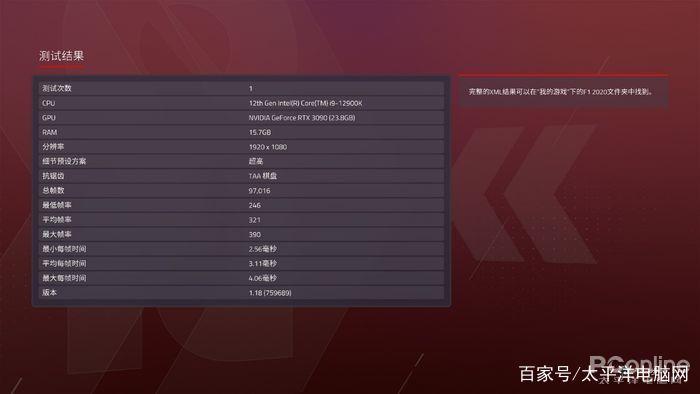
Including the four iTunes lists that the official claimed to have successfully reached the top-"Top 100 Songs", "Top 100 Albums", "hip-pop Songs" and "hip-pop Album", no track in this album has been found to be on the list.
Comparison of "Top 100 Songs List" before and after the list was cleared
The shocking US sales data on the DIGITAL SALES DATA(DSD sales data list) has also been completely cleared.
This afternoon (7th), the Chinese Department of Universal Music, the affiliated company, issued a statement saying that "Wu Yifan’s new album was taken off the shelves in iTunes America" was a false rumor.
Previously, Wu Yifan’s new album, which was released in the United States first, pushed for the release of two American music superstars, namely, Ariana Grande and Lady Gaga.
Not only did he win the top four lists of iTunes America in one fell swoop, but he also occupied seven seats in the top ten in the "Top 100 Songs List", but American netizens said that they didn’t know this artist at all.
Two days later, Sister A, who has owned two american music awards and four Grammy nominations, has been ranked fourth, causing netizens to question the cheating behavior of China fans.
After the list of suspects was cleared, Sister A and Lady Gaga were expected to sit on the first and second thrones with new orders.
At the moment, American netizens were jubilant: "Finally, we have a pure land …"
Some American netizens criticized Wu Yifan’s fans for maliciously brushing the list, which was undermining fair competition in the American music scene and demanding an apology.
However, it was quickly replied that Wu Yifan was not ashamed, and he was very happy to win the first prize through disgraceful means, and attached a congratulatory message to Weibo released by Wu Yifan on the day when the new special song was on the list.
Wu Yifan is another person who was cleared after KUN fans took advantage of the time difference between China and the United States, while American netizens were frantically brushing the list while sleeping.
China fans have been "killed" one after another, which makes American netizens can’t help but lambaste China Shuijun on social networking sites and create a new hot search word #Chinese bot#.

"The integration of industry and education is a brand-new ecosystem with deep cooperation and mutual integration between industry and education. It can promote the organic connection between education chain, talent chain and industrial chain and innovation chain, accelerate the mutual transformation and support of various resource elements in education and industry, effectively improve the quality of education, promote industrial transformation and upgrading, and help science and technology stand on its own feet." At this year’s National People’s Congress, Yang Jie, deputy to the National People’s Congress and chairman of China Mobile, put forward the proposal of "deepening the integration of production and education in the new generation of information technology to help realize high-level scientific and technological self-reliance". In an interview with People’s Posts and Telecommunications, Yang Jie said that deepening the integration of production and education in the new generation of information technology is not only conducive to meeting the urgent needs of both production and education, but also conducive to promoting the self-reliance of science and technology and promoting the high-quality development of education.The new generation of information technology urgently needs to deepen the integration of production and education. On the one hand, it is fertile ground for theoretical research and personnel training, on the other hand, it is the frontier of scientific and technological innovation and value creation. In the digital age, education and industry need not only effective convergence, but also deep integration and development. The party and the state attach great importance to the integration of production and education, and the report of the 19th National Congress of the Communist Party of China clearly put forward the major reform task of deepening the integration of production and education. Yang Jie said: "The new generation of information technology has become the strategic commanding height of global scientific and technological competition. Deepening the integration of production and education in the new generation of information technology is of great strategic significance for implementing the major decision-making arrangements of the national integration of production and education, accelerating the innovation and application breakthrough of the new generation of information technology, and promoting economic and social transformation and development. " In terms of industry, the development of information and communication industry has encountered theoretical bottlenecks, "shannon theory" and "Moore’s Law" tend to the theoretical limit, and the "stuck neck" problems such as high-end chips and independent operating systems are still outstanding. The original innovation ability of cutting-edge technologies such as programmable blockchain and brain-computer interface is insufficient, which urgently needs to be deeply integrated with various disciplines of education to promote theoretical innovation and technological breakthrough of the new generation of information technology. In education, the efficient circulation of data elements can dig out the "fourth paradigm" knowledge beyond the cognitive limit of human beings, which is conducive to breaking the traditional paradigm and path dependence that restrict innovation, and promoting the emergence of new ideas, new theories, new knowledge and new technologies. As an important subject of data production, storage and operation, enterprises not only have massive data that universities do not have, but also master industry-leading technical means and equipment resources. It can be said that colleges and universities also urgently need deep integration with industry enterprises, realize data resource sharing, and promote the wide application of a new generation of information technology in various disciplines. The reporter learned that in recent years, especially in the process of implementing the three-year reform of state-owned enterprises, China Mobile has been exploring new joint R&D modes with universities and innovative enterprises in science and technology, releasing the "Joint Innovation" plan, drawing the "R&D cooperation capability map", building a "partner library", and building a total of 12 joint R&D carriers of universities and 8 joint laboratories of enterprises to gradually build an open cooperation highland.The integration of production and education in the new generation of information technology faces three major problems. After years of exploration and practice, China has achieved initial results in the integration of production and education in the field of new generation information technology, but it still faces some problems and challenges in the process of deepening. Through long-term practice, visits and research, Yang Jie believes that these problems mainly focus on three aspects. First of all, the top-level design and supporting measures for the integration of production and education are not perfect, which restricts the enthusiasm and initiative of both schools and enterprises to participate in cooperation in depth. First, in terms of policy implementation, in recent years, China has issued a number of policy documents on the integration of production and education, and the top-level design of the integration of production and education has been basically established. However, due to the large number of units involved in the policy and the large span of levels, the responsibility for overall planning and coordination across units and levels is not clear, which makes it difficult for some policies to land. Second, in terms of management system, although the responsibilities and rights of all parties in the integration of production and education were clearly defined in the previous policy, in the actual promotion process, due to the lack of rigid constraints of relevant systems and regulations, the participation of all parties was different, and it was difficult to effectively protect the related rights and interests such as technological innovation and achievement transformation. Third, in terms of supporting measures, the previous policy of integration of production and education has covered supporting incentives such as finance, finance, land and credit. However, due to the lack of specific implementation rules, it is difficult for local governments to promote implementation, which to some extent inhibits the willingness and enthusiasm of all parties concerned to participate in the integration of production and education. Secondly, the supply of talent training in colleges and universities does not match the demand of industrial development, and the breadth and depth of the precise docking of production and education need to be improved. First, in terms of personnel training, the information communication between schools and enterprises is still not smooth, and there is still a big gap between the types, levels and quality of personnel training in colleges and universities and the needs of enterprises. Such as communications, mathematics, computers, integrated circuits and other interdisciplinary high-end talents are scarce. Second, in terms of curriculum system, classroom teaching is still based on theoretical knowledge, the experimental practice curriculum arrangement is relatively insufficient, and the content of teaching materials such as communication engineering and artificial intelligence lags behind the industrial development, which leads to the lack of students’ in-depth research and practical ability, and it is difficult to directly qualify for enterprise posts. Third, in terms of teaching staff, the theoretical research ability of college teachers is generally strong, but their professional practice ability is relatively weak, and their ability to transform theory into technology and further into practical productivity is insufficient. Fourth, in terms of teaching resources, the experimental equipment and training environment in colleges and universities lag behind the industrial development, and there is a clear gap with the leading enterprises in the industry. It is difficult for students to get in touch with the cutting-edge technology, advanced technology and equipment in the industry. Finally, school-enterprise cooperation is still at a shallow level, and the long-term mechanism of mutual benefit and win-win integration of production and education has not been fully established. First, in terms of cooperation, the current school-enterprise cooperation is still dominated by written agreements, lectures, student internships and "peer-to-peer" cooperation in running schools, and deep cooperation such as two-way flow of talents, collaborative education between schools and enterprises, and transformation of scientific and technological achievements is still insufficient. Second, in terms of mechanism, because the integration of production and education involves the government, industries, enterprises, universities and other parties, and the interests of all parties are quite different, under the existing cooperation mode, enterprises have to bear a lot of extra costs such as talent training and resource investment, which leads to the widespread phenomenon of "school fever and cold", and a multi-party mutually beneficial and win-win cooperation mechanism has not yet been formed.Take measures to deepen the integration of production and education in the field of new generation information technology In view of the above-mentioned problems and shortcomings, Yang Jie suggested further strengthening the top-level design, optimizing and perfecting the related discipline construction and personnel training system, exploring the establishment of a cooperative education mechanism between schools and enterprises, and realizing the high-quality development of education and the self-reliance of science and technology. Strengthen the top-level design and improve the management system and supporting measures for the integration of production and education. First, it is suggested to study and formulate guiding opinions on deepening the integration of production and education in the field of information technology in the early stage, accelerate the in-depth cooperation between information and communication enterprises and universities, and set a demonstration benchmark for the integration of production and education in other fields. Second, it is suggested to promote the formulation of management measures for the integration of production and education, clarify the main responsibilities of all parties in the integration of production and education, and clearly define the rights and interests of personnel training, intellectual property rights, technological innovation and achievement transformation in the process of cooperation. Third, it is suggested to promote the establishment of a normalized communication mechanism among the government, industry, enterprises and universities, and hold regular matchmaking meetings on the integration of production and education to effectively solve practical problems and ensure the effective connection between industrial demand and education supply. Fourth, it is suggested to increase policy support for enterprises and universities deeply involved in the integration of production and education in finance, finance, land, credit and other aspects, and study and formulate detailed rules for the implementation of incentive measures to create a good policy environment for deepening the integration of production and education. Strengthen discipline construction and speed up the training of talents at all levels needed by the state and enterprises. It is suggested that enterprises should be encouraged and guided to actively participate in the construction of discipline system and talent training plan in colleges and universities, and based on the industrial development trend, joint colleges and universities should formulate discipline system and talent training objectives in line with the evolution direction of the new generation of information technology. Facing basic research, we will further strengthen the construction of basic disciplines such as mathematics and physics, promote the next generation of basic theoretical research such as information theory, cybernetics and system theory, and cultivate talent soil for breaking through the "deep water area" and "no man’s land" in the field of information and communication. Facing the transformation of digital intelligence in all walks of life, we will further expand the scale of personnel training in information technology disciplines such as communication, artificial intelligence, big data, cloud computing and information security around the transformation and upgrading of the real economy. Facing the frontier of information and communication technology, facing the key requirements of the next generation network such as 6G and computing network, we will strengthen the interdisciplinary construction of communication and artificial intelligence, quantum information, new materials, new energy and aerospace technology. Facing the problem of chip "sticking", we will increase the training of talents in integrated circuits and related software and hardware such as chip design, packaging and testing. Optimize the curriculum system and improve students’ practical ability with the guidance of industrial demand. First, it is suggested to encourage and guide enterprises to actively support the construction of curriculum system in colleges and universities, give full play to the advantages of basic theory and enterprise practice resources in colleges and universities, jointly create excellent courses, incorporate the latest industry standards, production processes, product development and other industrial practice knowledge into college courses, increase the number of professional practice courses, and establish an all-round and whole-process curriculum system from basic theory to practical application. Second, it is suggested that colleges and universities should be encouraged and guided to take the practical scientific research projects and technical topics of enterprises as important topics for college students’ graduation projects, and increase the proportion of practical graduation projects. Third, it is suggested to encourage and guide enterprises to conditionally open non-confidential data, knowledge base, development capabilities and other resources to universities to help universities accelerate the development of information technology and related disciplines. Create a double-qualified team and establish a long-term mechanism for collaborative education between school and enterprise personnel. First, it is suggested to encourage academicians, Changjiang scholars, Jie Qing and other top experts and scholars to work in enterprises, and technical backbones and outstanding experts of enterprises to teach part-time in colleges and universities, so as to smooth the two-way flow of high-end talents between schools and enterprises. Second, it is suggested that colleges and universities set up flexible personnel training and personnel management systems, such as clarifying the training mode of "three-year school-one-year enterprise", so as to consolidate the basic theoretical knowledge, improve students’ practical ability, and incorporate students’ internship results into graduation evaluation. Third, it is suggested that enterprises set up talent exchange stations to provide research topics closely related to productive scientific research for Ben Shuobo, provide cash rewards for research results that effectively solve the production and operation problems of enterprises, and give priority to students with outstanding performance. Fourth, it is suggested that colleges and universities should improve the teacher classification assessment system, and take the exchange of posts, scientific and technological innovation and achievement transformation as an important basis for talent evaluation, job title evaluation, achievement award and income distribution, so as to fully stimulate and release the innovative potential of technical talents. Improve the practice platform, strengthen the co-construction of training bases and explore the cooperation mode. First, it is suggested that schools and enterprises build a number of laboratories, joint innovation centers and other bases, and carry out immersive real-life teaching based on the real data, scenes and platforms of enterprises to enhance students’ industrial cognition and practical application ability. Second, it is suggested that relying on the patents, papers, reports and other achievements produced by the base, the path exploration such as achievement transformation and application promotion should be carried out, so that more achievements can be quickly transformed into real productive forces. Third, it is suggested to encourage and guide universities, industries, enterprises, scientific research institutions and other relevant parties to form an integration alliance of production and education, to form a complete chain of basic research, application development, transformation of scientific and technological achievements and industrialization, and to help upgrade the industrial base and modernize the industrial chain.
Xinhua News Agency, Beijing, December 31 ST, "Several Guidelines on Political Life within the Party under the New Situation" requires: "Insist on democratic appraisal of party member." It is clearly stipulated that Party organizations should "urge party member to analyze the Party spirit in accordance with the party member standard stipulated by party constitution, the pledge of joining the Party and the personal reality". This is the successful experience accumulated in the exploration of the Party’s advanced construction for many years, and it is the vivid practice of the Party Central Committee to strictly manage the Party in an all-round way and earnestly strengthen the construction of grass-roots party organizations since the 18th CPC National Congress, which is of great significance to strictly control the political life within the Party, enhance the vitality of party organizations and strengthen the education management in party member.
To maintain the party’s advanced nature and purity, we need specific grasping hands and mechanisms. At the end of 1988, according to the requirements of the central authorities, all localities explored and carried out democratic appraisal of party member on a pilot basis. By 1991, most grass-roots party organizations in China had conducted a democratic appraisal of party member, and achieved good results. In the Party’s in-depth educational practice of the Party’s mass line, in accordance with the deployment of the CPC Central Committee, grass-roots party organizations hold organizational life meetings and conduct democratic appraisal of party member’s work, generally in accordance with the procedures of personal self-evaluation, party member mutual evaluation and democratic evaluation. Practice has proved that the democratic appraisal of party member can make the vast number of party member undergo a rigorous exercise in inner-party political life, is an effective method to strengthen party building by regular work and system, and is a good form for the vast number of party member to carry out self-education and mutual education.
Democratic appraisal of party member’s integration of education, management and supervision of party member is conducive to strengthening the party spirit of party member. Democratic appraisal party member focused on strengthening party member’s party spirit, especially political firmness, and put ideological education in the first place. He organized and guided party member to follow the party member standards in various ways, linked his thoughts and work practice, found out the gaps and shortcomings in implementing the party’s line, principles and policies, adhering to the purpose of serving the people wholeheartedly, keeping close contact with the masses, abiding by the law, being honest and self-disciplined, and completing various tasks assigned by the party organization, analyzed the causes of existing problems, and formulated rectification measures. This is an effective way to carry out the re-education of party member standards, so that every party member can always remember his party member identity and regulate his words and deeds with party member standards everywhere.
Democratic appraisal of party member, making full use of the weapons of criticism and self-criticism, is conducive to the Party organizations relying on their own strength to solve the problems existing in the ranks of party member. The most important work link of democratic appraisal of party member is that on the basis of self-criticism, party member carries out mutual criticism among party member, Party organizations and party member. In view of the tendency of self-criticism and mutual criticism in inner-party life, many places organized party member to seriously study party constitution, review the expositions of the older generation of revolutionaries on criticism and self-criticism, and help party member improve the consciousness of carrying out criticism and self-criticism. Many grass-roots party organizations give priority education and help to those who whitewash their mistakes, fail to check if there are problems or fail to check deeply. Many leading cadres in party member took the lead in setting an example, consciously participating in study and appraisal as ordinary party member, taking the lead in dissecting themselves, taking the lead in carrying out criticism, and taking the lead in doing a good job in rectification, thus setting an example for restoring and carrying forward the fine traditions of the Party. Grass-roots party organizations often use the weapon of criticism and self-criticism for a long time, and the more they use it, the more clever it will be, and the role of fighting fortress will be fully exerted.
Democratic appraisal of party member combines commending the advanced and mobilizing the positive factors within the Party with disposing the unqualified party member and overcoming the negative factors, so as to keep the Party organization alive. Through appraisal, many "double-strong" party member with strong party spirit and strong work were commended by the party organizations, and some of them were particularly outstanding advanced models awarded the title of Excellent Communist party member by the superior party committees. At the same time, some party member, who took the lead in their work and life, received education and vigilance, while party member, who was unqualified and made various mistakes, was dealt with by the organization or disciplined. Through democratic appraisal, party member has been educated from both positive and negative aspects, and the pioneering role has become the driving force, which has led, inspired and educated people more, forming a good orientation of being advanced and catching up with the advanced.
Sephora has been in the news recently. Apart from the news that there will be personnel changes in the global CEO position, it has also made a series of high-profile appearances in China, intending to consolidate the new competitiveness in the high-end national fashion beauty retail field.
Does the change of Sephora’s global CEO affect China business?
According to foreign media reports, Sephora’s current global CEO Martin Brok will officially leave at the end of this month.
Martin Brok said at WWD Summit in May this year that Sephora’s opportunity is to integrate innovations from all over the world and make full use of Sephora’s operational strength in Europe, America and Asia. He said, "Sephora is a global brand", which will provide the same experience and growth drivers in North America, Asia and Europe. It is reported that Brok and Sephora’s key executives have differences on how to establish a global organizational structure.

Martin Brok’s departure comes at a critical time for Sephora. In Europe, Sephora is preparing to re-enter the physical retail market in the UK except London, while in China, it began to recover after the epidemic was closed.
Brok joined LVMH Group in September 2020 as the global CEO of Sephora. Previously, he was the president of Starbucks in Europe, Middle East and Africa. After Brok’s departure, the position will be held by Chris de Lapuente, Chairman and CEO of LVMH Group’s boutique retail business unit.
However, according to insiders of Sephora, the change of the global CEO of Sephora will not affect the related business in China.
Not affected by coaching change, Sephora Bets on high-end Guochao beauty cosmetics brand.
In recent years, Sephora has been introducing and incubating high-end beauty brands in China, such as CHA LING Tea Spirit, WEI Azure Beauty, Herborist TaiChi herborist Taiji, INOHERB TANG Appropriate Herbal Tang, MAOGEPING·LIGHT Mao Geping Guangyun, Yumei Yumei and COLOR STUDIO BY MARIE DALGAR Marie Daijia Color Studio.

The rising market demand of Guochao beauty brand is an important reason for Sephora’s continuous introduction of China brand. In this regard, Sina Beauty interviewed Ms. Chen Bing, the general manager of LVMH- Sephora Greater China, to talk about how beauty collection stores are coping with market changes in the rapidly changing digital age.
Exclusive interview: Ms. Chen Bing, General Manager of LVMH- Sephora Greater China.
Maggie Chan Chen Bing joined Sephora in 2019 and is currently the general manager of Sephora Greater China under LVMH Group.
Ms. Chen Bing has rich business management experience, keen business sense and profound insight into China consumers. During her career, she has participated in and successfully led the successful transformation of many multinational companies, including well-known multinational companies such as Unilever, Lijie and Johnson & Johnson.

Sina Beauty: What is the core competitiveness of Guochao Beauty compared with international brands?
Ms. Chen Bing:According to the data of "Beauty Leads the Future —— White Paper of Sephora’s High-end Beauty Industry in 2021" published by Sephora and CBN in 2021, in the past year, the sales of high-end national fashion brands in Sephora increased by 55%, the number of buyers increased by 32%, and the per capita consumption increased by 18%, showing great growth potential!
Guochao represents young people in China joining the world fashion trend, and their firm international vision makes us full of confidence in the development of Guochao beauty cosmetics; While taking China culture out, they also introduced western culture continuously, which further stimulated the development of national culture. In addition, many international brands are shouldering the heavy responsibility of pushing local culture to the global market, and China, as a country with profound cultural heritage, is firmly convinced that Guochao brand can develop into an international trend as more and more China consumers show strong recognition of cultural self-confidence and brand quality. Sephora should not only "bring in" good products, but also "take out" local brands and try its best to help these brands gain recognition from international consumers.
Sina Beauty: How many national brands are Sephora selling at present? Will you continue to explore new China brands in the future?
Ms. Chen Bing:In recent years, Sephora has continuously introduced and incubated high-end beauty brands in China, and continuously brought more high-quality national fashion beauty products into consumers’ field of vision. In the release of exclusive new products and global beauty trends in the summer of 2022, Sephora announced the "Made in China" China brand luminous plan, in which 11 international brands participated.
The national tide is gradually evolving from a design style to a more comprehensive and profound product idea. Sephora believes that the national tide is the prevailing trend, and only those that are suitable for Chinese people are the "true national tide", such as beauty brands that are suitable for Chinese’s skin and have the cultural connotation of China. The high-end image of Guochao beauty brand can be blessed by the formula or technology that combines China’s traditional skin care ingredients, the product concept and brand story with China elements, and the design sense enhanced by China’s traditional craftsmanship. In the future, Sephora will also continue to dig deep into the potential of Guochao brand based on its insight into consumers, incubate new categories with stories, and provide consumers with a unique shopping experience of Guochao beauty through constantly upgraded services.
The editor learned about these high-end national brands, such as the brand-new high-end brand of Yiyi Herbal Tang, which is owned by Sephora and sold only in Sephora channel. The brand focuses on the research of royal skin care products in the Tang Dynasty. The only Chinese herbal cosmetic research center in China and Shanghai University of Traditional Chinese Medicine jointly developed the products, and the amount of herbal medicine added in most products was as high as 60% or more. Pass the secret key of pleasing color and yourself by Tang Fang, and restore and sublimate Tang Fang to the greatest extent through modern science and technology.

The price of its royal motherwort series products ranges from 480 yuan to 680 yuan, while the price of the extravagant gold-nourishing energy series is higher, and the product price is around 780 yuan. The price of the Yujing soap bean series is lower than that of 300 yuan.

There is also the brand "MAOGEPING·LIGHT Mao Geping Guangyun", which is familiar to both beauty lovers and national fashion lovers. It is also an exclusive cooperative brand, which continues the aesthetic concept of beauty artist Mao Geping, integrates oriental aesthetic culture, shows the oriental charm with oriental culture, and creates exquisite faces with light and shadow changes to show the unique beauty of women.


Blue Beauty is a brand that settled in Sephora, China in early 2013. It mainly focuses on young and mature skin people, and deeply repairs and balances women’s skin problems.
Inheriting the 5,000-year-old theory of the balance of Yin and Yang in traditional Chinese medicine, we created a "blue beauty" beauty system-dividing products according to skin needs. The product series includes four series: Xuanqi, Chunyang, Yanyin and Zen. Anyone who has been to Sephora’s shop must have been exposed to this brand.


Talking aboutWhat specific measures does Sephora take to incubate high-end national fashion beauty cosmetics?At that time, Ms. Chen Bing replied: "In order to further accelerate the growth of a new generation of China beauty cosmetics and show the strength of the national beauty cosmetics, Sephora officially launched the" Made in China "China brand lighting plan, expecting to support five local brands to become high-end beauty representatives with sales exceeding 100 million in three years, and support these brands to land in international retail channels through Sephora’s strong global network, loyal user community and rich experience in high-end retail creation."

As for the specific cooperation measures formulated for incubating the China brand, Ms. Chen Bing also answered them one by one:
1. Share consumer insights with cooperative brands: For example, the White Paper of Sephora’s High-end Beauty Industry is published authoritatively every year to help them formulate the best brand strategy and channel play, and jointly explore future development paths such as international’ going out to sea’ strategy.
2. Provide an opportunity for brands to contact with the media and industry celebrities: The biannual release of Sephora exclusive new products and global beauty trends will help brands have a close dialogue with the public in China and get practical feedback.
3. Give direct access to consumers and convey brand ideas and product highlights: Sephora has long customized multi-file theme promotion and content output for hot topics of consumers, and continues to bring the latest beauty information to consumers.
4. Join hands with brands to provide exclusive beauty experience in stores: let consumers really get in touch with products, and plant grass star items while feeling professional beauty service. For example, the high-end skin care experience provided in offline stores and the unique experience such as artistic makeup created by the founders of the brand.
5. Actively help brands to explore more business opportunities in online channels: for example, empower brands to operate Tmall flagship stores efficiently or tap the potential of private communities, provide them with marketing strategies tailored to local conditions, successfully improve their visibility and exposure in China market, and realize sales increment.

Beauty collection store The competition in offline beauty shops is fierce.
Do you still remember the online celebrity punch card communication marketing model built by the colorful beauty egg wall by the first batch of brands, represented by colorists and Wow Colour, in the wave of beauty collection shops that rose in 2020? Those local beauty brands that have sold at a low price have become popular.

However, the performance of these collective stores seems to be unsatisfactory in the later period. According to Wow Colour official website, as of January 2022, the total number of stores recorded in China was about 135, which was half of the peak of 300, and the number of stores in the north, Guangzhou and Shenzhen was 3, 4, 11 and 3. The HAYDON Black Hole Beauty Collection Store, which opened in Hangzhou in September 2021, has also closed. According to the original plan, HAYDON Black Hole will open more than 20 stores in several key cities in China in 2021, and achieve the goal of more than 100 stores in 2023.

It can be said that HAYDON black hole, the local beauty collection store of standard Sephora, has completely fallen into a "black hole".
As an old-fashioned beauty retailer that entered China as early as 2005, Sephora has developed in China market for 17 years, and gained a relatively stable popularity and status in China. However, it is not uncommon for established giants to be upstarts in the fashion industry, and Sephora is no exception. The retail sales of emerging beauty products such as WOW COLOUR, THE COLORIST and HARMAY are hot. On the surface, these "online celebrity" seem to dilute the flow of established beauty products. Emerging retailers mostly introduce domestic products and Japanese and Korean make-up products, attracting the attention of many consumers, especially young people, with low prices and trendy shop designs.

According to the China Beauty Collection Store Industry Report, the following points are summarized. 73.5% consumers go to the new beauty collection store because they can buy brands and products that traditional beauty collection stores don’t have; 66.3% and 49.5% of consumers think that on-the-spot trial and shopping samples are important reasons to drive them to the place, and another 52.7% of consumers put forward the’ light BA’ mode, which is the gospel of social phobia patients for the younger generation.

The biggest difference between Sephora and Xinxing Beauty Collection Store is that the groups it serves are not the same. If you want to buy big brands and niche new overseas brands, you can only choose Sephora. Although offline emerging retailers are diversified and younger, it seems that it is still difficult to shake the status of established retailers in a short time.
From My People,My Country to My People My Homeland to Me and My Father, the three series of works have a progressive theme, extending from home to individual, and the more delicate expression makes this new work easier to empathize with the audience. Of course, there are still many differences in the creative ideas of this National Day Trilogy. The "Motherland" takes the development of time as the order, and the "hometown" takes the geographical space as the axis. This time, the "Father" focuses on the love and enlightenment of parents to their children in the ordinary families in different times in the past hundred years.

My Father and I are composed of four chapters, namely, Riding the Wind directed by Jason Wu, Poems directed by Zhang Ziyi, Duck Prophet directed by Xú Zhēng, and A Young Man’s Journey directed by Shen Teng. Coincidentally, the four directors are all "acting well and directing", and they also play the leading role in their own films. They are all "self-directed and self-acted" and they are very skilled. At the same time, what Zhang Ziyi and Shen Teng brought this time is their directorial debut, which is undoubtedly very exciting. You know, without a few brushes, no one dares to join the "Me and Me" series, which has always been a box office smash. After watching the movie, I not only got the ultimate experience of joy and blood, but also was moved by the true story behind the movie.

Jason Wu’s Riding the Wind: Entering Jizhong Cavalry Corps in War of Resistance against Japanese Aggression Period
Riding the Wind tells us that in War of Resistance against Japanese Aggression, there was another cavalry regiment that frightened the enemy-Jizhong Cavalry Corps, and Ma Renxing, played by Jason Wu, was the head of the cavalry regiment at that time. At that time, the cavalry regiment was interspersed between Pinghan railway lines, taking long-distance raids, detours and other tactics to attack the enemy, and also taking into account the tasks of transporting materials, escorting leading organs to cross the enemy blockade and helping the masses to produce. At the peak of the whole regiment’s firepower, there were more than 1,200 people, 1,300 war horses, more than 700 Czech rifles and janjawids, 20 light machine guns and 2 mortars. The fighting capacity was so strong that the enemy was terrified. As shown in the movie, at every critical moment, the cavalry regiment would use sabre to cut a way out to cover the transfer of organs and the masses. In the hearts of the people in the base areas, the Jizhong cavalry regiment was a banner of victory.

At the beginning of the film, a group of fellow villagers are grabbing food. After the enemy planes pass by, they put on their horses and filed out of the dense corn fields, becoming warriors to annihilate the enemy. This scene has a strong audio-visual shock, whether it is a cool cavalry team or passionate music, it is too exciting. The dense fields they want to protect are in sharp contrast with the Japanese invaders who came to invade, and a patriotic enthusiasm and patriotic pride came into being. This scene really made Zhan Taifeng understand the strong national cohesion and sense of justice that was sung in the song "The wind is roaring, the horse is barking, and the Yellow River is roaring". In the story, Jason Wu brought us the most burning horse battle in domestic movies.
Zhang Ziyi’s Poems: Exploring the "Two Bombs and One Satellite" Base in the Gobi Desert
As the only female director in Me and My Father, The Poem brought by Zhang Ziyi has a more touching expression of warmth, but what it conveys under the warmth is hard-core dedication. The story of "Poetry" took place in the early days of the founding of the People’s Republic of China, focusing on the hard work of astronauts in the Gobi desert. However, this time, the perspective is quite a bit "sword-leaning", which conveys the selfless dedication of a generation of space researchers from the perspective of women and children.

The seemingly gentle story gradually brings a series of emotional conflicts: reorganized families, adopted children, accidents, and white lies about "father’s poems" … The most common plot often contains the most touching energy, which is the most tearful chapter in the whole film. Zhang Ziyi, who appeared without makeup, restored the love between her parents at that time to the greatest extent with her superb acting skills, which also showed us.
Xú Zhēng’s Duck Prophet: Revealing the shooting of China’s first TV advertisement.
Xú Zhēng is regarded as the "elder statesman of the Three Dynasties" in the National Day Trilogy. From the first film to the present, he is the only director and starring in the creation of every film, from Leap in that year to The Last Lesson in that year, and now to Duck Prophet. More interestingly, this is the fourth collaboration between him and child star Han Haolin, because Han Haolin has made a guest appearance in Lost in Russia besides the National Day trilogy, but it is not easy for them to become the father and son in the story for the first time until the Duck Prophet.

The story of Duck Prophet tells the shooting experience of the first TV advertisement in China. The story happened in the early stage of reform and opening up, and everything is new. But this chapter praises not only the people who contributed to the birth of this advertisement, but also all the trendsetters who dare to think and act. This is an innovative consciousness and fighting spirit that is not afraid of challenges and forge ahead.
Shen Teng’s "Youth Travel": Linking the Time and Space Travel between the Present and the Future
Compared with the traditional narrative of the first three stories, Shen Teng, the first director, feels a little "the sword is on the side of the front". Although he brought a typical Mahua FunAge-style comedy style, he has more moving power after integrating the stories of science fiction and parent-child feelings. Although this story begins with Shen Teng’s bionic man breaking into the lives of primary school students, it ends with him returning to his starting point-in 2050, he was supposed to cross into the future, but he accidentally returned to the past. Although this was not a successful task, it linked the kinship between the bionic man and the scientist who created him, and told the audience by the story that the most important thing in family education is to support children’s dreams and accompany their growth.

Aside from each director’s grasp of the characteristics of the times and the emotional analysis, looking back at these four chapters, each story also tells us a lot of things that we didn’t know before, which is the historical value added by the film in addition to its audio-visual appeal and story influence: the four stories took place in the years, from War of Resistance against Japanese Aggression period to the present era, capturing several nodes of the creation, establishment and development of the new China. The four stories are narrated around the four key words of "sacrifice", "dedication", "innovation" and "dream" respectively, and let us feel from point to point that today’s life is hard-won. The four stories are independent and organically combined, with a strong lineup, wonderful plot, sincere feelings and tears in Qi Fei, which is the most worth watching in this National Day file.